Walking Meşrutiyet Avenue
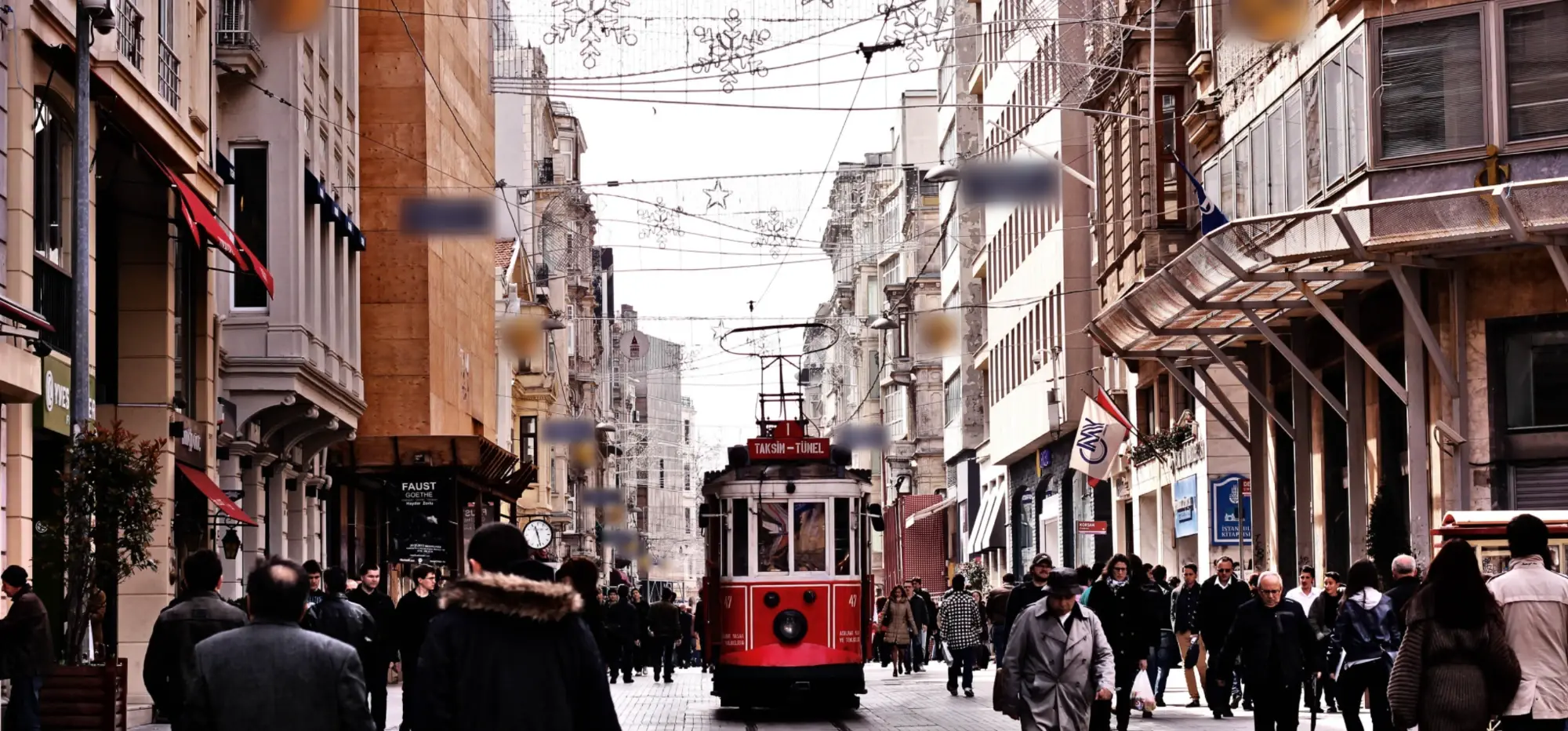
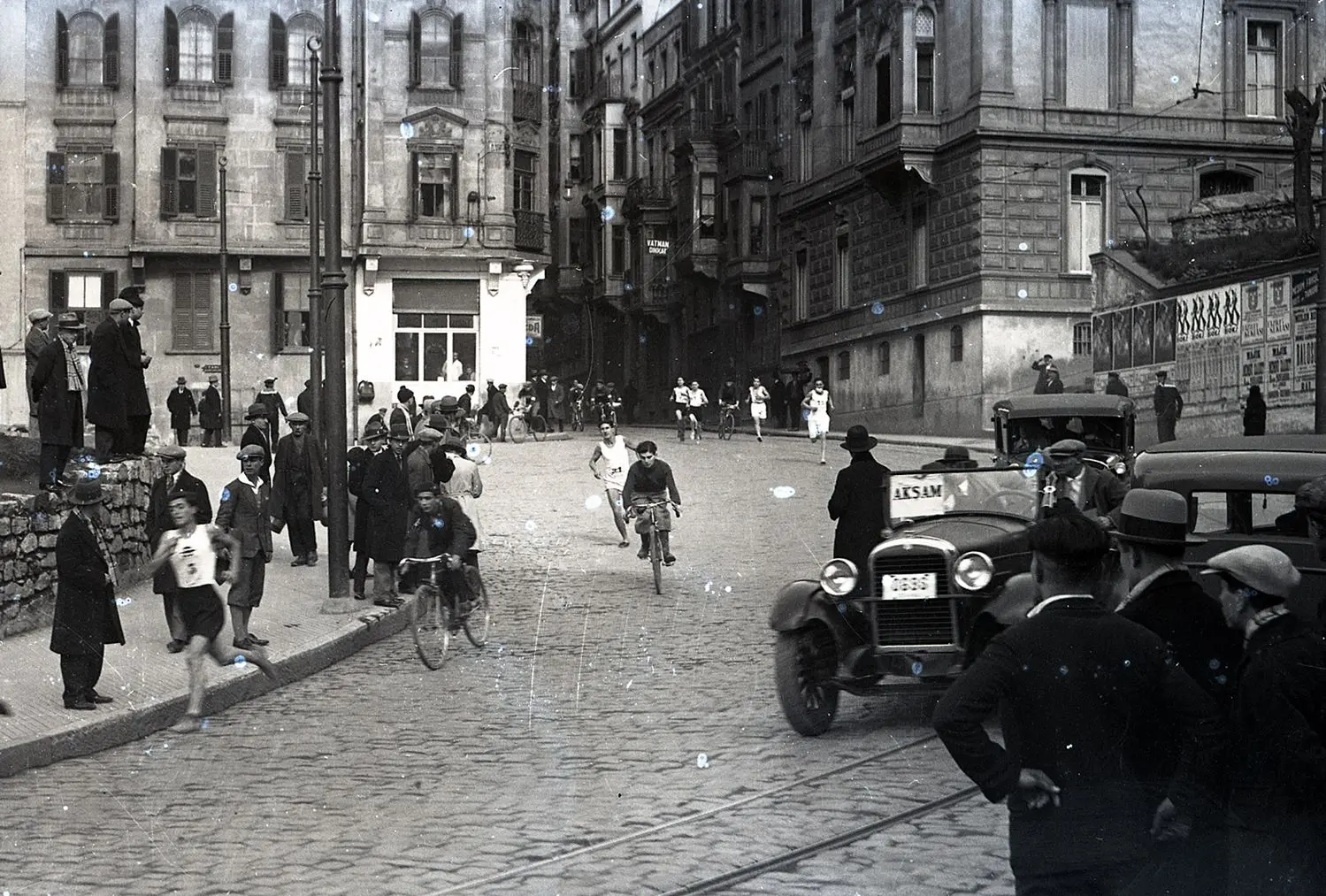
Running parallel to İstiklal, Meşrutiyet Avenue is the quieter but no less grand face of old Pera. In the late 19th century, great hotels welcoming travellers from Europe, embassy palaces, clubs and apartment buildings lined both sides of this street. Today some of these buildings are still hotels, while others have found new life as museums, libraries and galleries.
The route starts at Galatasaray, follows the avenue through Tepebaşı and ends in Şişhane. The way is flat and short, but there are many stops; don't rush.
The route at a glance
- Sponeck and the first film screening
- Büyük Parma Han
- The British Consulate General
- Hazzopulo Passage
- Tepebaşı: the Istanbul Research Institute and the Grand Hotel de Londres
- Pera Museum
- The Pera Palace
- Palazzo Corpi
- The Union Française and Şişhane
A little context first
Meşrutiyet Avenue runs along the ridge of Pera facing the Golden Horn. The Tepebaşı slope below the avenue was Pera's entertainment district in the 19th century, with its gardens and theatres. When the Orient Express reached Istanbul, this line became the address of hotels serving European travellers.
Most of the buildings on the avenue were built between the 1870s and the 1910s in neoclassical and eclectic styles.
STOP 01Sponeck and the first film screening
As you turn from Galatasaray into Meşrutiyet, the ground floor of the old apartment building on the corner once housed the Sponeck beer hall. It is generally accepted that Istanbul's first public cinema screening was held in this hall in 1896. A plaque on the façade recalls the event.
Next to it, the mirrored walls of the Avrupa Pasajı (Europe Passage) lead through to the Fish Market on İstiklal; for the other end of the passage, see our İstiklal walk.
STOP 02Büyük Parma Han
Rising opposite the passage, Büyük Parma Han was built in the last years of the 19th century by Paul Parma, one of the court tailors of Sultan Abdülhamid II. The floral compositions and female busts on the upper floors are the most striking decoration on the façade. The building is now a hotel.
STOP 03The British Consulate General
A large stretch of the avenue is taken up by the British Consulate General behind high walls. Also known as Pera House, the building was constructed between 1845 and 1855 by William James Smith, based on a design by Charles Barry, architect of the Houses of Parliament in London. For many years it was Britain's embassy in Istanbul; since the capital moved to Ankara it has served as the consulate general.
STOP 04Hazzopulo Passage
Across from the consulate is Hazzopulo Passage, which opens onto İstiklal. Dating from the 19th century, with its stone-paved open courtyard, stairs and small workshops, it is one of Beyoğlu's quietest passages. The cafés in the courtyard make a good stop to escape the crowds for a few minutes.
STOP 05Tepebaşı: the Istanbul Research Institute and the Grand Hotel de Londres
Approaching Tepebaşı, an elegant façade catches the eye: the Suna and İnan Kıraç Foundation's Istanbul Research Institute. Housed in a restored historic apartment building, the institute is open to researchers with its library and exhibitions on the history of Istanbul.
A little further on stands the Grand Hotel de Londres (Büyük Londra Oteli), built in 1892. The two female figures supporting the balcony on the middle floor and the salons full of old furniture show that the hotel still keeps its 19th-century atmosphere.
STOP 06Pera Museum
Pera Museum, on the corner at Tepebaşı, occupies the building constructed in 1893 by the architect Achille Manoussos as the Hotel Bristol. The Suna and İnan Kıraç Foundation restored the building and opened it as a museum in 2005.
The museum's best-known work is Osman Hamdi Bey's painting The Tortoise Trainer. Alongside its collections of Orientalist painting, Anatolian weights and measures, and Kütahya tiles and ceramics, it also hosts temporary exhibitions.
STOP 07The Pera Palace
The avenue's most famous building is the Pera Palace, built between 1892 and 1895 to designs by Alexandre Vallaury. The hotel was built to host passengers of the Orient Express arriving from Paris and became one of Istanbul's first hotels of European standard.
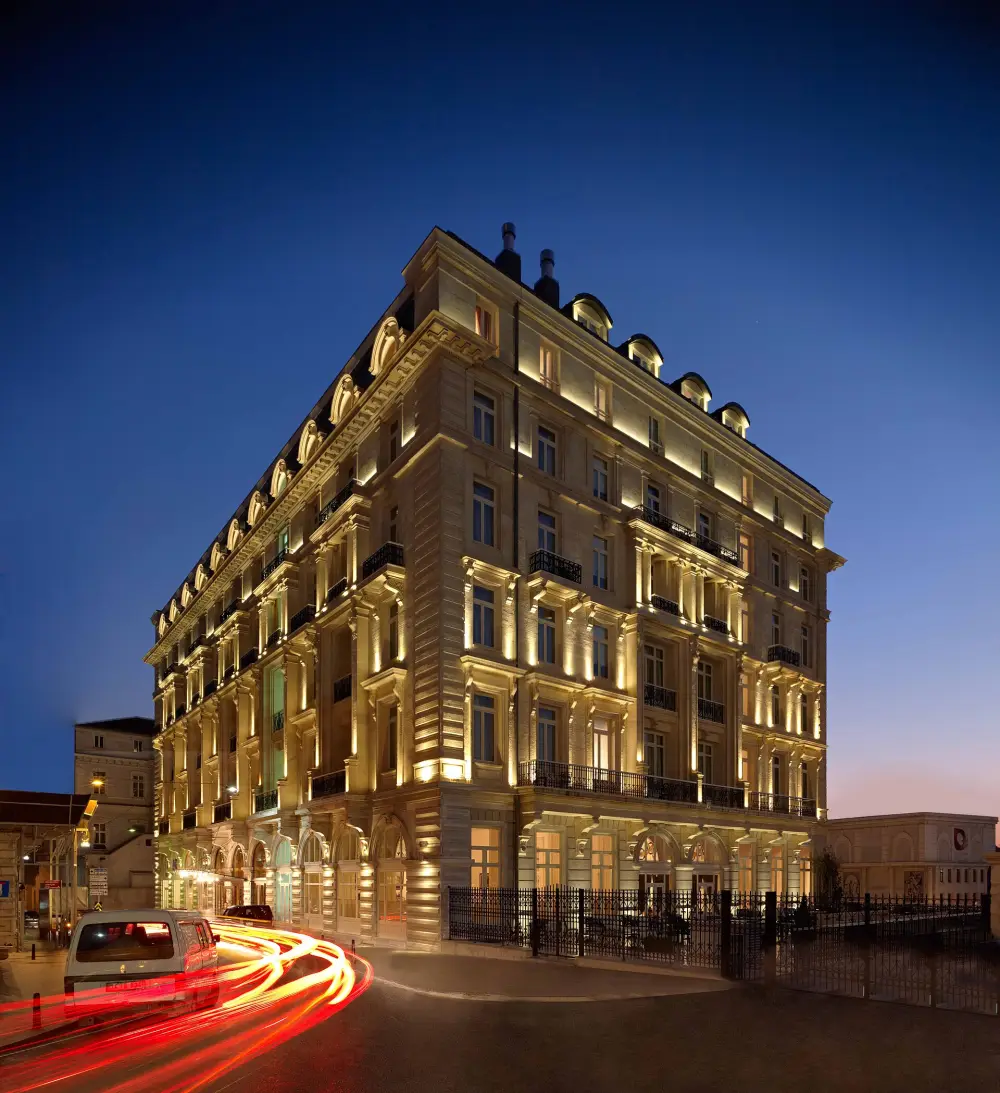
Room 101, where Atatürk stayed when in Istanbul, is preserved as a museum. Many famous writers and travellers were among the hotel's guests, Agatha Christie first among them.
STOP 08Palazzo Corpi
On the other side of the road rises Palazzo Corpi, built between 1873 and 1882 for the Genoese shipowner Ignazio Corpi. The United States government bought it in 1907; after the embassy moved to Ankara, it served as the US Consulate General from 1937 to 2003.
With its original frescoes, marble floors and wooden doors restored, the palace has housed a private members' club since 2015.
STOP 09The Union Française and Şişhane
Before heading down to Şişhane, stop at the Union Française building, designed by Alexandre Vallaury in 1896 for Istanbul's French community. It temporarily hosted Istanbul Modern while the museum's new building was under construction; today it is home to a bookshop, a café and art galleries.
The avenue ends in Şişhane in front of the historic Beyoğlu Municipality building. From here you can head down past the Frej Apartment to Galata, or cross to Tünel Square and on to Bankalar Street.
Check the visiting days and hours of Pera Museum and the Istanbul Research Institute before you go. Consulate buildings can only be seen from outside; follow security instructions when taking photos. The hotels' lobbies and patisseries are the easiest way to see the buildings from inside.
Living and investing in Pera
Meşrutiyet Avenue and the Tepebaşı area form Beyoğlu's hotel and culture axis. Most historic buildings on the avenue are used as hotels, offices and institutional buildings; residential demand is concentrated more in the back streets of Asmalımescit, Tepebaşı and Şişhane.
In this area, investment value comes largely from owning the whole building and being able to convert it to commercial use such as a hotel or offices. The area lies within Beyoğlu's urban conservation zone; change of use and restoration require approval from the heritage conservation board.
For prices and rent levels in Pera see our Pera area guide. Looking for property in the area? Browse our portfolio or get in touch.