Walking Galata
Galata carries the traces of another city within Istanbul. A walled Genoese colony in the Middle Ages, it kept its commercial identity after the conquest and in the 19th century became a district of banks, hans and Levantine apartment buildings. Today, a few streets away from the crowds around the tower, you can read all of these layers on foot.
The route starts in Şişhane, climbs to Galata Tower along Büyük Hendek Street, then descends to the remains of the Genoese period and the Camondo Stairs. It ends on Bankalar Street, a few minutes from Karaköy.
The route at a glance
- Şişhane: the first municipal building
- The Frej Apartment
- Büyük Hendek Street
- Galata Tower
- The back streets behind the tower
- Saint Pierre Han
- The Podestà Palace: what remains of Genoese Galata
- The Camondo Stairs
A little context first
In the late 13th century, this slope across the Golden Horn from Byzantine Constantinople was granted to Genoese merchants. They surrounded it with walls and turned it into an autonomous colony with its own governor, churches and commercial buildings. In 1453 the colony surrendered to the Ottomans, but Galata remained a port and trading district.
The origin of the name is debated; the most common explanation links it to the Greek word gala, "milk". Most of today's street fabric took shape in the second half of the 19th century, after the walls were demolished and the moats filled in.
STOP 01Şişhane: the first municipal building
Start at the Şişhane metro exit. The large building facing the square was built in the last quarter of the 19th century for the Sixth Municipal District (Altıncı Daire-i Belediye), set up to administer Pera and Galata. The Ottoman Empire's first municipal organisation on the European model was run from here, and the building is still used by Beyoğlu Municipality.
STOP 02The Frej Apartment
On the Galata-side corner of the square stands the Frej Apartment, whose façade dominates the whole junction. Built in 1905–1906 for the Frej family of Beirut by the architect Konstantinos Kyriakidis, it is one of Galata's most monumental apartment buildings. Its corner façade marks the start of the route from Şişhane to the tower.
STOP 03Büyük Hendek Street
Beside the Frej Apartment, turn into Büyük Hendek Street. The name, "Great Moat Street", comes from the moat in front of the Genoese walls; once it was filled in, this road was laid out in its place. Historic apartment buildings and hans line the way.
Neve Shalom Synagogue, on this street, opened in 1951 and is the largest synagogue of Istanbul's Jewish community. Part of the building now houses the Museum of Turkish Jews.
STOP 04Galata Tower
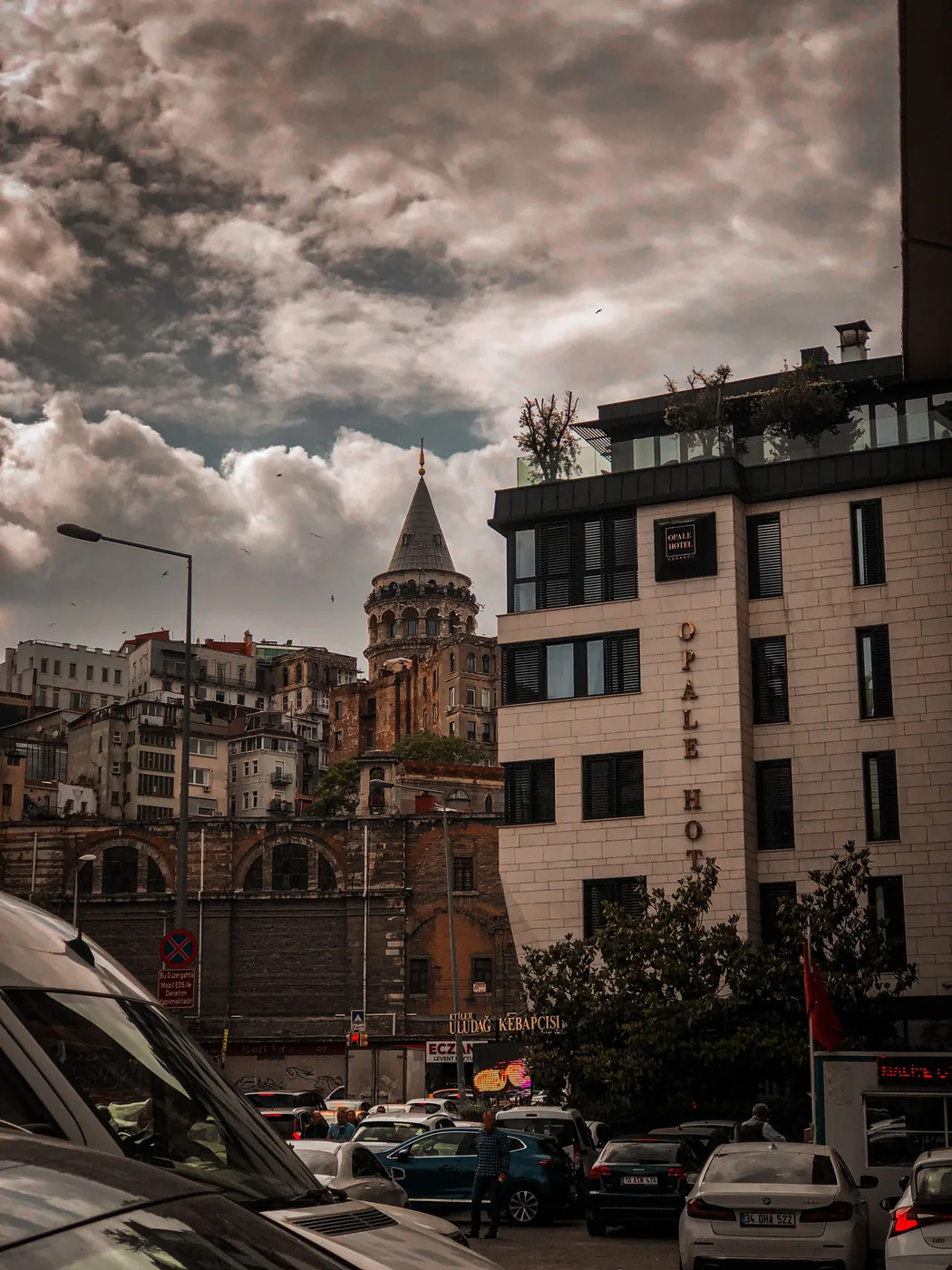
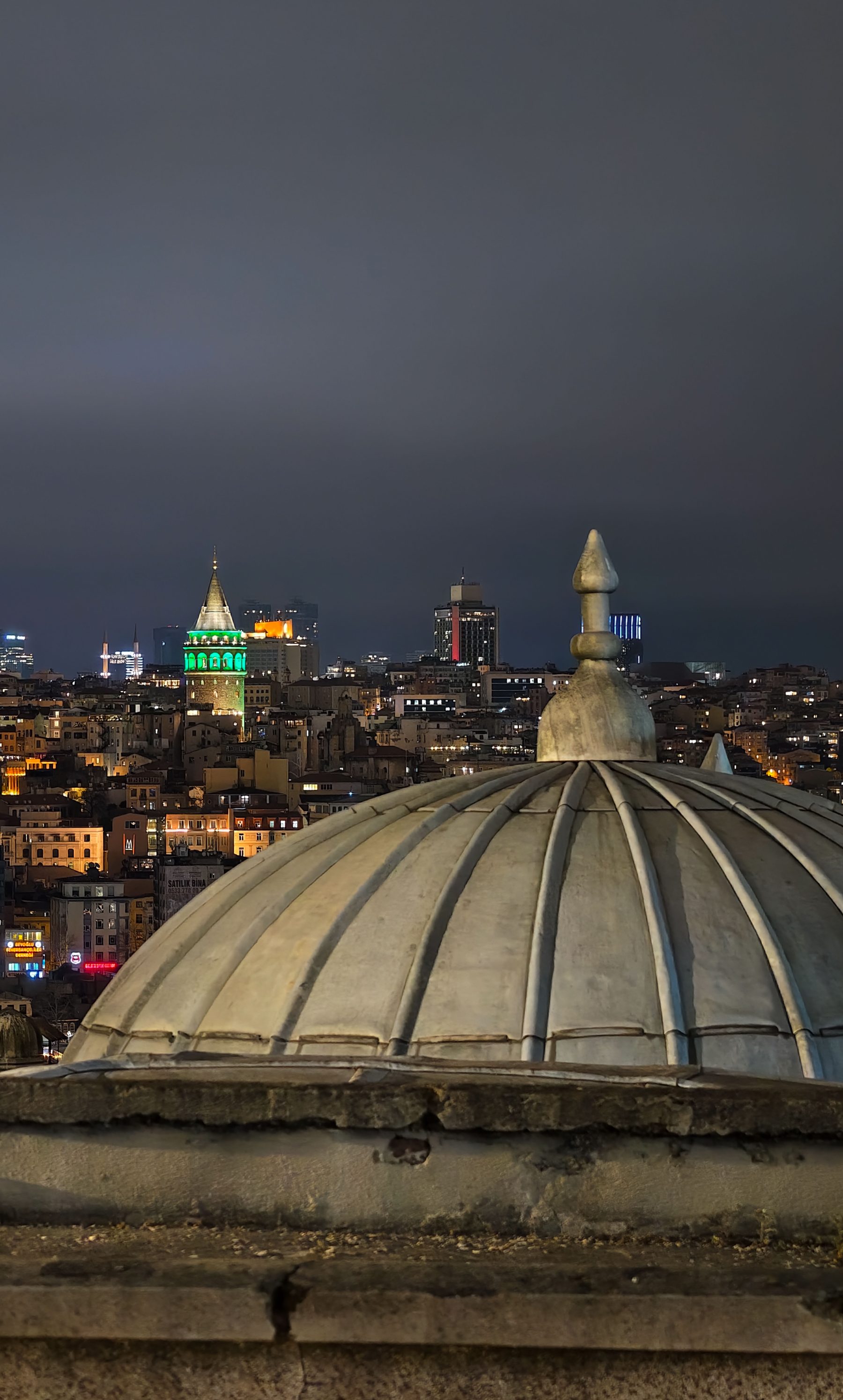
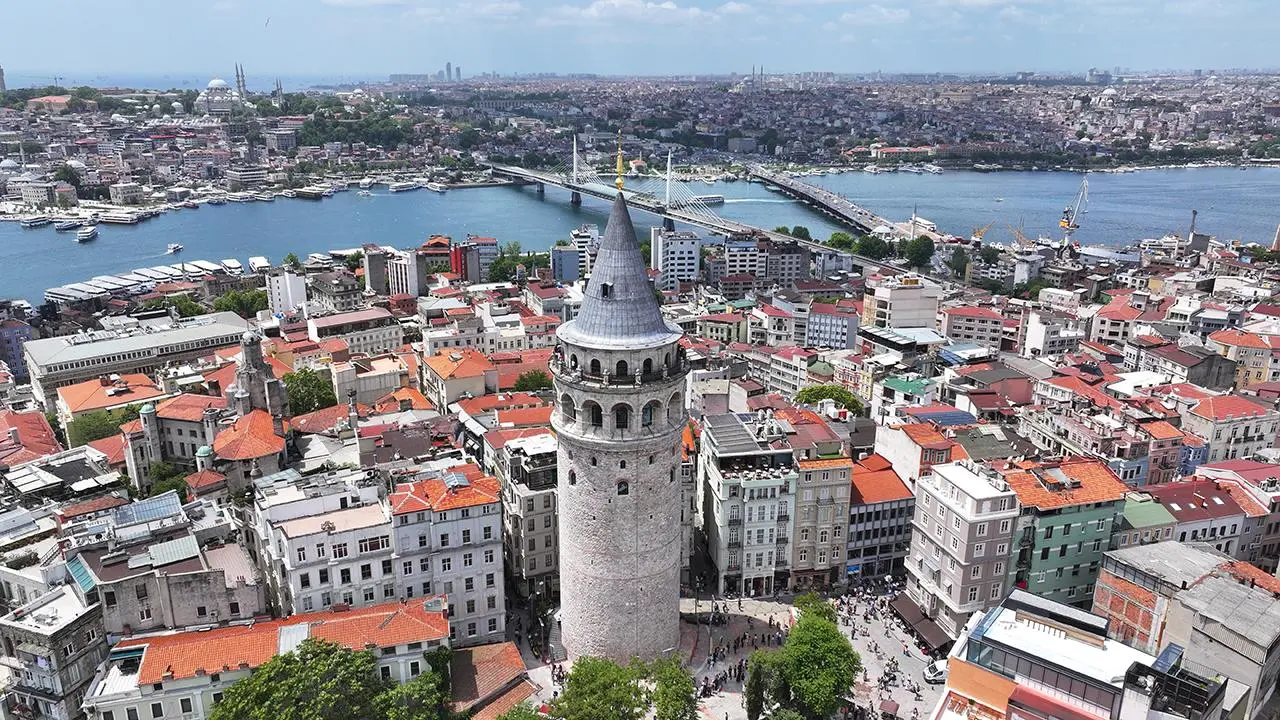
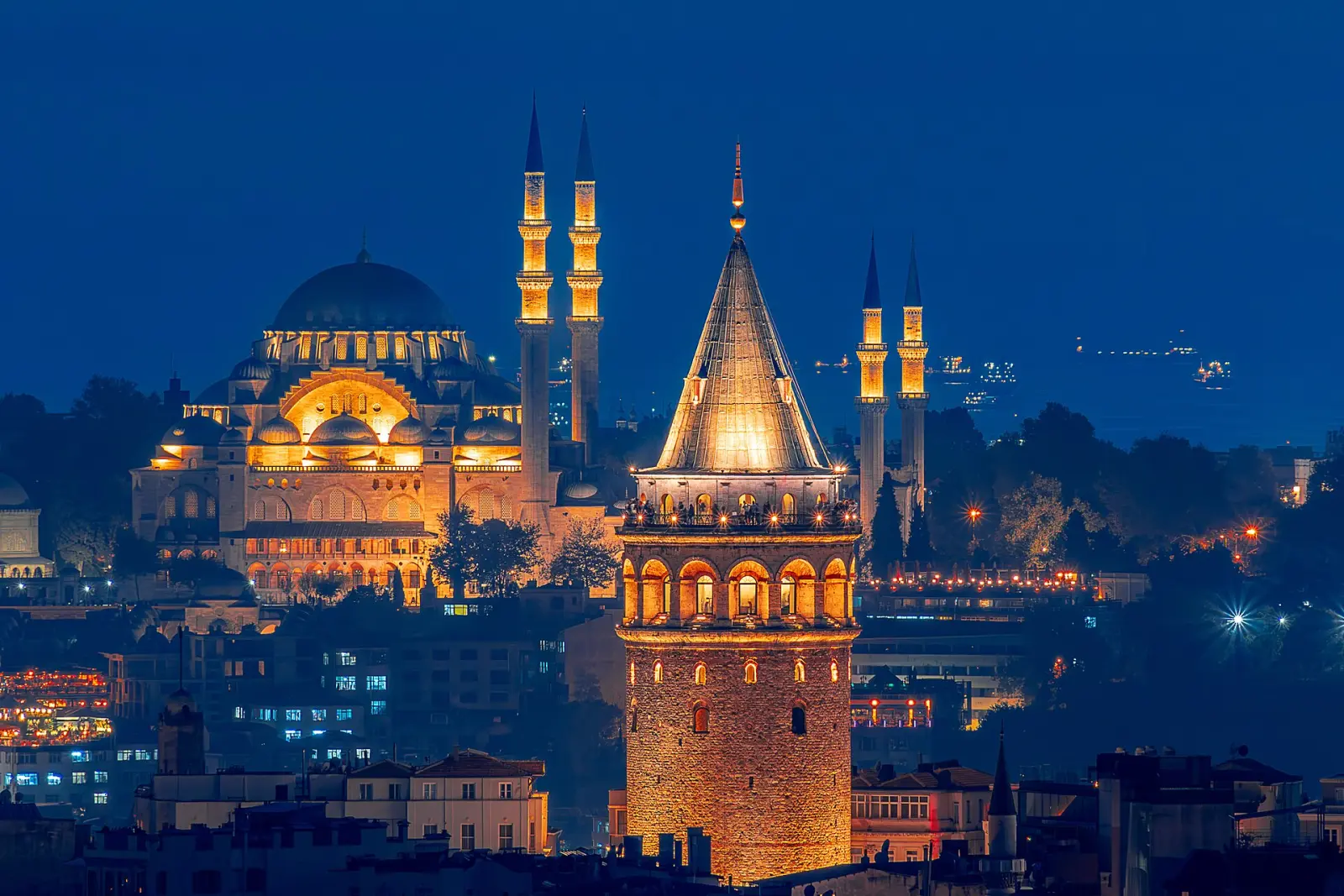
At the end of the street rises the symbol of the district: Galata Tower. The Genoese built the present tower in 1348 as the highest point of their walls. About 67 metres tall, it served as a watchtower and fire lookout in the Ottoman period; it has been repaired many times and its conical roof renewed.
From the tower's viewing gallery you can see the Golden Horn, the Historic Peninsula and the Bosphorus. The queue can be long, though; walking around the tower is also a good way to see how it appears from Galata's different streets.
STOP 05The back streets behind the tower
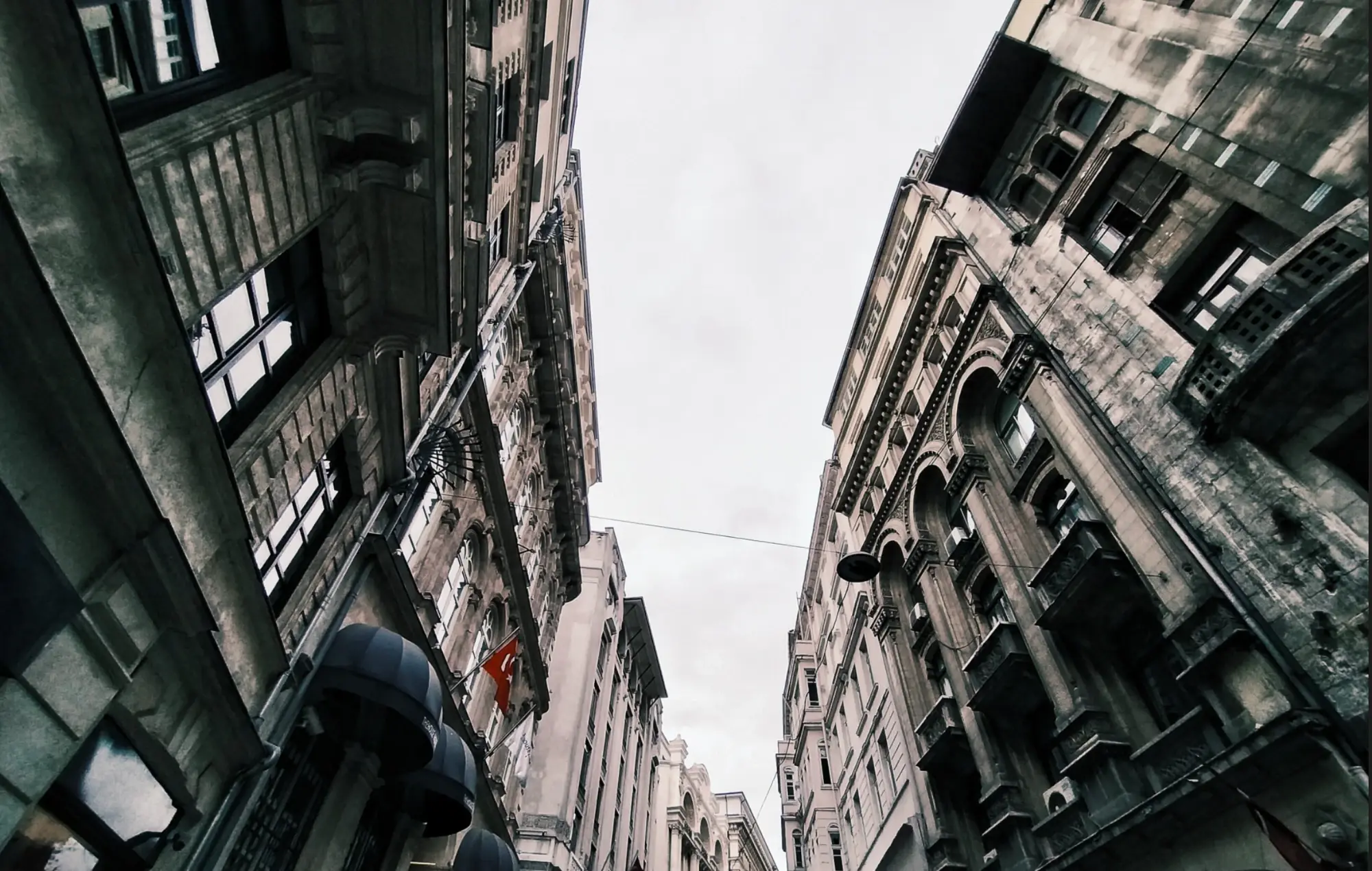
Step away from the tower square and Galata quietens down. Narrow streets such as Otçu, Tımarcı and Camekan are lined with apartment buildings from the late 19th century. Above some doors the construction year is given in both the Gregorian and the Hebrew calendar, street-level traces of Galata's large Jewish population.
The same streets also hold small neighbourhood mosques dating back to the 15th and 16th centuries. These few hundred metres are the best place to see Galata's multi-faith past.
STOP 06Saint Pierre Han
Heading down towards Bankalar Street, near the Genoese buildings, you reach Saint Pierre Han. It was built in 1771 by the French embassy. From 1856 it housed one of the first headquarters of the Ottoman Bank, before the bank moved to its large building on Bankalar Street.
The nearby St. Georg Austrian High School and its church also carry traces of Galata's Catholic past. The school took on its present identity when Austrian Lazarists settled here in 1882.
STOP 07The Podestà Palace: what remains of Genoese Galata
Galata's most important surviving medieval civic building is the palace of the podestà, the Genoese governor. Built in 1314, it was repaired in 1316 after a fire. In 1880, when a tram line was laid along Bankalar Street, most of its front façade was demolished; the new front built in its place is known today as Bereket Han.
From the back, the original stone walls and windows can still be made out. The building has long been awaiting restoration; if you don't look carefully, you might pass it by as the back of an ordinary han.
STOP 08The Camondo Stairs
The last stop is one of Galata's most photographed corners: the Camondo Stairs. Built between 1870 and 1880 by the Camondo family, Sephardic bankers, the stairs gave a shortcut between the family's homes above and their offices on Bankalar Street. With two intertwining flights and curving balustrades, they are an original example of the eclectic style of the period.
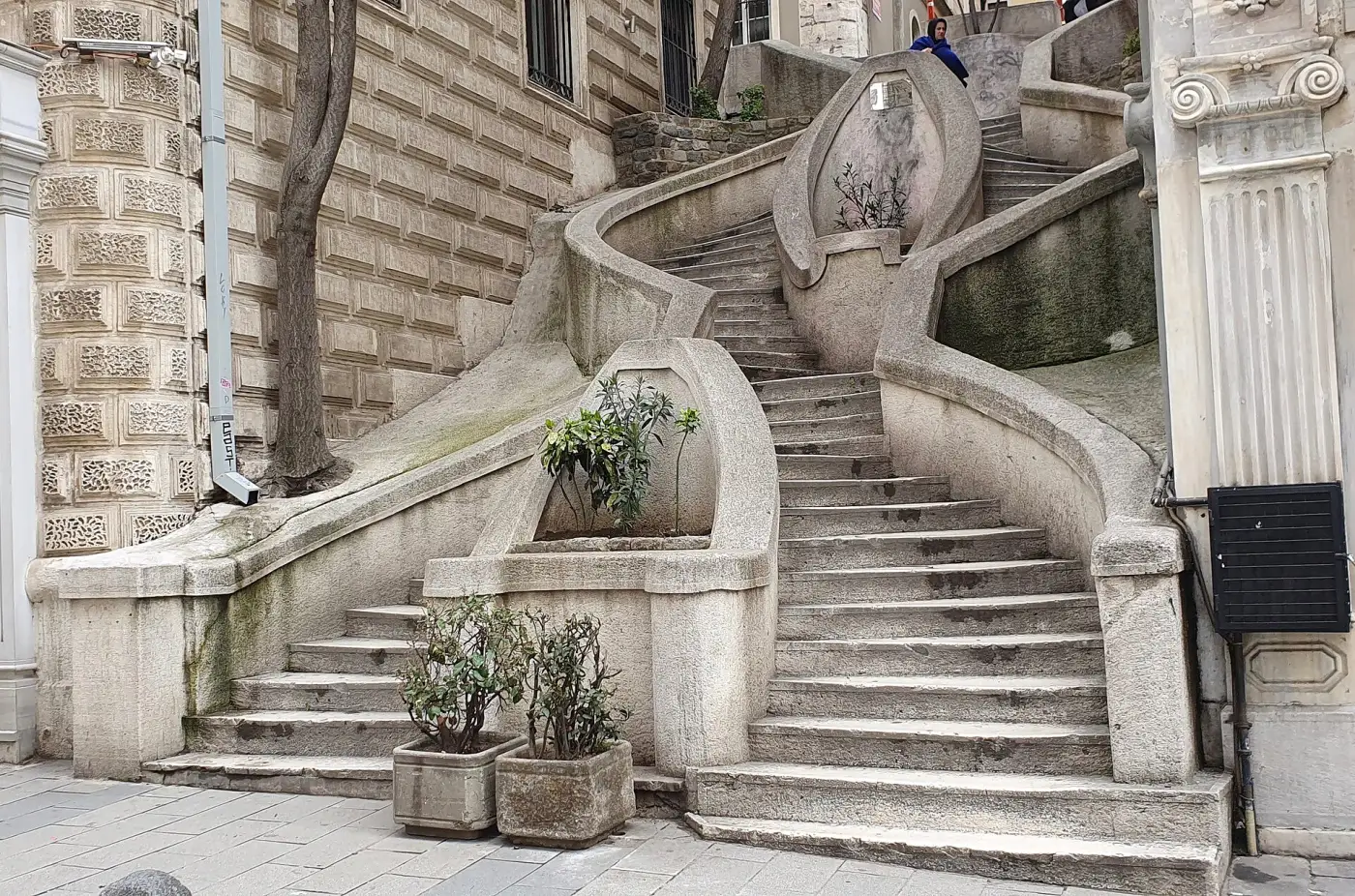
On the street at the top of the stairs, the building known as the tailors' synagogue, built in 1894, has hosted exhibitions as the Schneidertempel Art Center since 1999. Below begins Bankalar Street, the heart of the Ottoman financial world, which we cover in a separate walk.
The area around Galata Tower is very crowded all day; the back streets are far more pleasant early in the morning. If you want to climb the tower, check current ticket and opening information in advance. Synagogues and churches usually require prior permission or set visiting hours. The slopes are steep and some surfaces are cobbled.
Living and investing in Galata
Galata is one of Beyoğlu's most expensive micro-markets. When a tower view, a restored historic building and high ceilings come together, the price is set more by that combination than by square metres. Even on the same street, a restored flat and a building with permit issues can be far apart in value.
The district lies within both urban and archaeological conservation zones; restoration, added floors and façade work depend on conservation board decisions. For years a hub of short-term rentals, Galata has seen that model become harder in apartment buildings under Turkey's Law No. 7464, so assessments should be based on long-term rent and capital growth.
For current prices and a pre-purchase checklist see our Galata area guide, and to compare two neighbourhoods read Cihangir or Galata?. Looking for a property in Galata? Browse our portfolio or get in touch. Buying as a foreign national? See the title deed process for foreigners.