Walking İstiklal Avenue
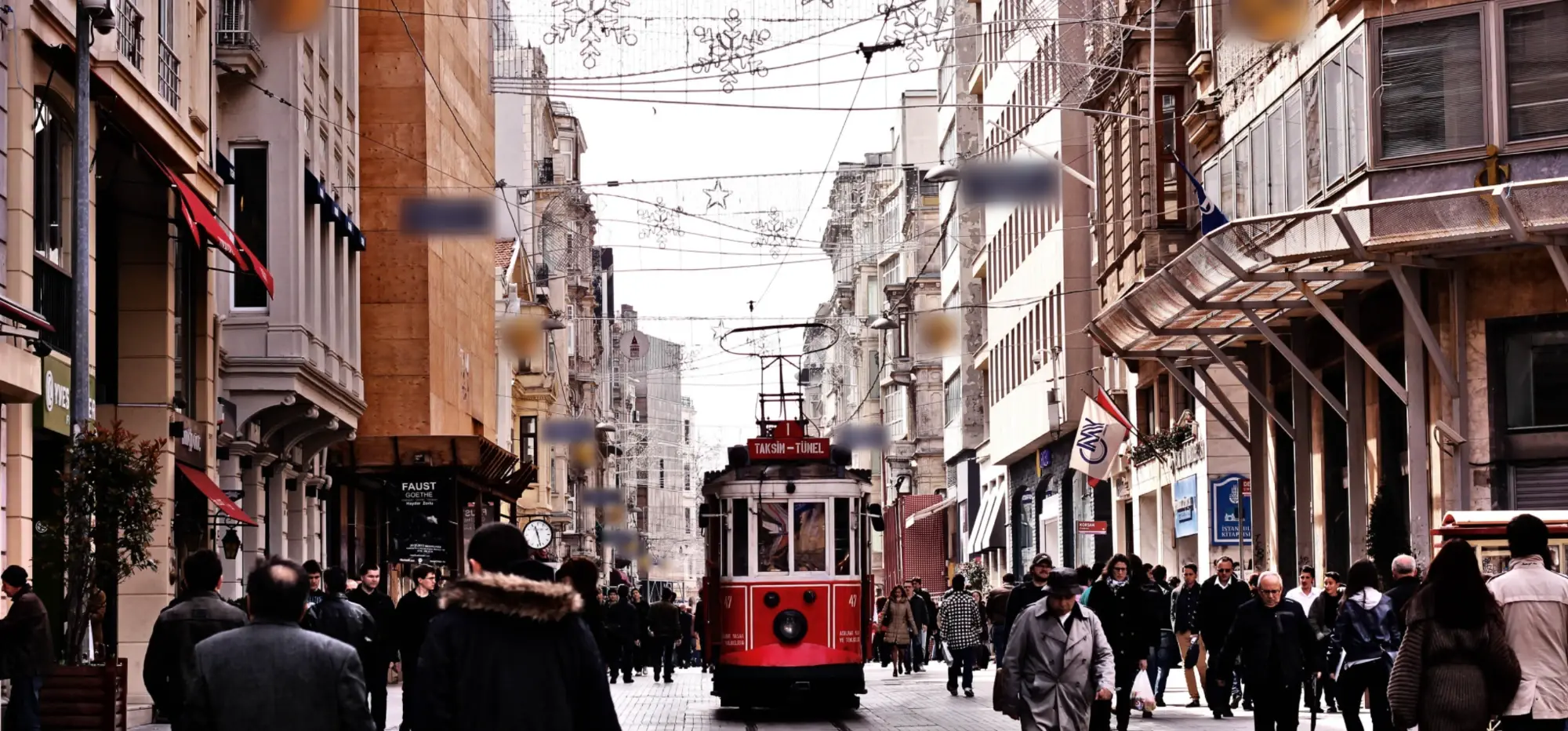
Running about 1.4 kilometres from Taksim to Tünel, İstiklal Avenue is the most-walked street in Istanbul. It is easy to hurry through the crowd; but lift your eyes above the shop windows and the arcades, apartment buildings, churches and embassy buildings of 19th-century Pera appear one after another.
This route walks the avenue from end to end, from Taksim Square towards Tünel. The way runs gently downhill; in nine stops it visits the avenue's most significant buildings and opens doors to our neighbouring walks in the side streets.
The route at a glance
- Taksim Square and the Maksem
- The avenue's name and the tram
- Ağa Mosque
- Grand Pera (Cercle d'Orient)
- Çiçek Pasajı and Galatasaray
- Mısır Apartmanı and Akif's home
- Suriye Pasajı
- The Botter Apartment
- Narmanlı Han and the Tünel
A little context first
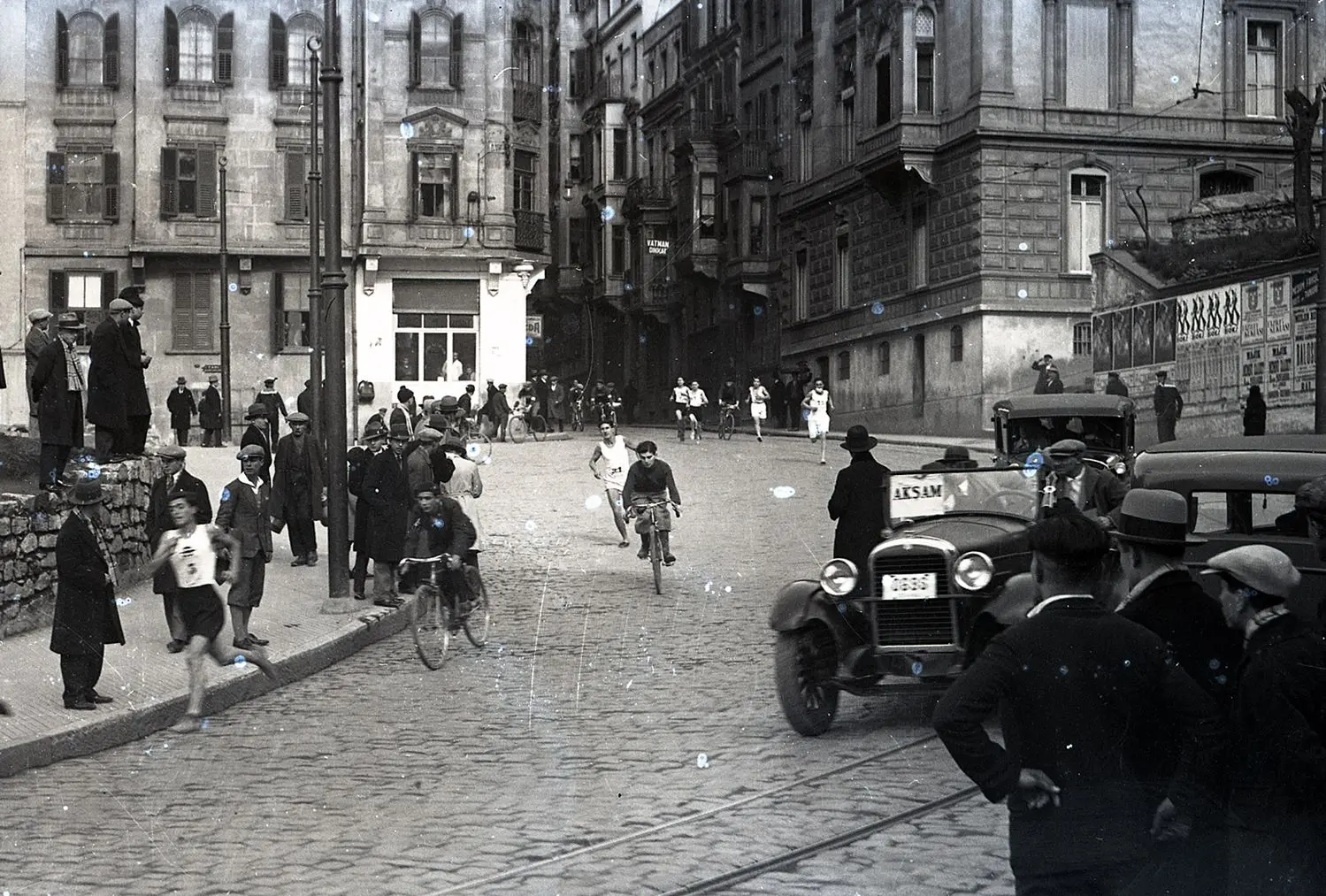
In the Ottoman period this road was called Cadde-i Kebir in Turkish and the Grande Rue de Péra in French, both meaning "the Great Avenue". It was the backbone of 19th-century Pera, where embassies, Levantine merchants and non-Muslim families settled: theatres, hotels, patisseries and department stores opened here.
Most of the buildings you see today were rebuilt in masonry after great fires, between the 1870s and the 1910s. That makes the avenue one of the densest concentrations of neoclassical, eclectic and Art Nouveau architecture in Istanbul.
STOP 01Taksim Square and the Maksem
The square takes its name from the small stone building on the corner: the Taksim Maksem. Built in 1732 under Mahmud I, it was where water brought from the north of the city was distributed to Beyoğlu and Galata; the word "taksim" means exactly this division.
Taksim Mosque, opened in 2021, rises on the square. At the entrance to Sıraselviler Avenue stands Hagia Triada Church, built between 1876 and 1880; we cover that side in our Cihangir walk.
STOP 02The avenue's name and the tram
In the early years of the Republic the avenue was renamed İstiklal, "Independence", after the War of Independence; 1927 is most often given as the year the street signs changed. In 1990 it was closed to traffic and pedestrianised, and around the same time the nostalgic tram between Taksim and Tünel returned to the rails.
STOP 03Ağa Mosque
On the stretch near Taksim, inside a small courtyard, stands Ağa Mosque. Its roots go back to the late 16th century, and it was rebuilt in the 19th. Until Taksim Mosque opened, it was the only mosque directly on the avenue, a quiet part of Pera's multi-faith fabric.
STOP 04Grand Pera (Cercle d'Orient)
Around the middle of the avenue, the five-storey building whose façade runs for about 45 metres is the Cercle d'Orient. It was built in 1883–1884 by the architect Alexandre Vallaury for Abraham (Eramyan) Pasha, a former secretary to the khedives of Egypt. It housed both a club where foreign diplomats and officials gathered and residences.
The Emek Cinema inside the building was for many years the symbol of the Istanbul Film Festival. After a long renovation, the building is now known as Grand Pera.
STOP 05Çiçek Pasajı and Galatasaray
Approaching Galatasaray, you reach the entrance of Çiçek Pasajı, the "Flower Passage". Its French name is Cité de Péra, and it was built in the 1870s. It is said to owe its current name to Russian émigrés who arrived in Istanbul after the 1917 Revolution and began selling flowers here. The back of the passage opens onto the Fish Market and Nevizade.
Just ahead is the iron gate of Galatasaray High School. The school's roots go back to the palace school of the reign of Bayezid II; in 1868 it began teaching in French as the Mekteb-i Sultani. The streets behind the school lead down to Çukurcuma, and the passages on the opposite side to Meşrutiyet Avenue.
STOP 06Mısır Apartmanı and Akif's home
Past Galatasaray rises Mısır Apartmanı. Built around 1910 for Prince Abbas Halim Pasha of the Egyptian dynasty by the architect Hovsep Aznavur, it is one of Istanbul's early reinforced-concrete buildings.
Mehmet Akif Ersoy, the poet of the Turkish national anthem, spent the last six months of his life in a flat in this building. The Ministry of Culture and Tourism expropriated the flat in 2018, and in 2021, the 100th anniversary of the anthem's adoption, it opened as the Mehmet Akif Ersoy Memorial House. For St. Anthony's Church just ahead and the side streets, see our TomTom walk.
STOP 07Suriye Pasajı
Walking on towards Tünel, you come to Suriye Pasajı, with "Cité de Syrie" written in French above its entrance. Begun in 1901 and completed in 1908, it was commissioned by Hasan Halbuni Pasha of Syria and Mehmet Abud Pasha, one of the presidents of the Istanbul Chamber of Commerce; its architect was Demetre Bassiladis.
The passage was one of the large buildings designed as residences; it housed a cinema and some early lifts.
STOP 08The Botter Apartment
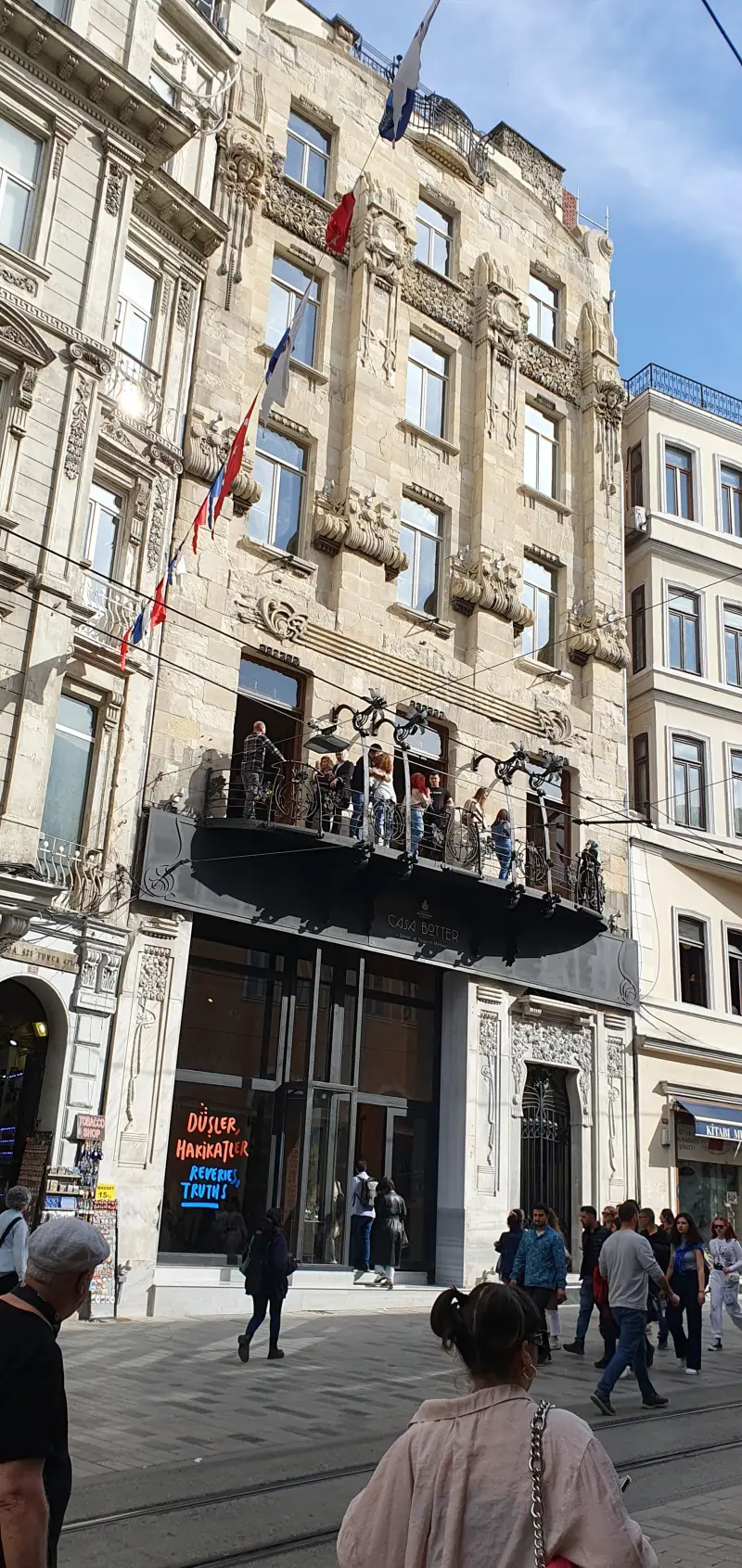
The narrow, tall façade on the Tünel end of the avenue is the Botter Apartment, known as Istanbul's first Art Nouveau building. It was designed in 1900–1901 by the Italian architect Raimondo D'Aronco for Jean Botter, the Dutch tailor to the palace; the lower floors served as a fashion house and workshop, the upper floors as the family home.
Left abandoned for many years, the building was restored by the Istanbul Metropolitan Municipality and opened in spring 2023 as Casa Botter, an art and design centre. The rose and whiplash motifs on the façade are worth a close look.
STOP 09Narmanlı Han and the Tünel
The last major building on the route is Narmanlı Han with its inner courtyard. It was built in 1831 to designs by Giuseppe Fossati as Russia's embassy in Istanbul; after the embassy moved, it served for a time as a prison. In 1933 the Narmanlı brothers from Erzurum bought the building and let it at modest rents to writers, painters and publishers. Ahmet Hamdi Tanpınar was among those who lived here.
The han changed hands in the 2010s and underwent extensive restoration. A few steps on, the avenue ends at Tünel Square. The Tünel, which runs down to Karaköy from here, opened in 1875 and is known as the world's second-oldest underground line after London's. From the square you can head down to Galata or walk back along Meşrutiyet Avenue.
İstiklal is very crowded at weekends and in the evenings; weekday mornings are best for looking at the buildings. Check the opening days and hours of the Memorial House, Casa Botter and other exhibition spaces before you go. The tram runs infrequently; walking is often faster.
Living and investing around İstiklal
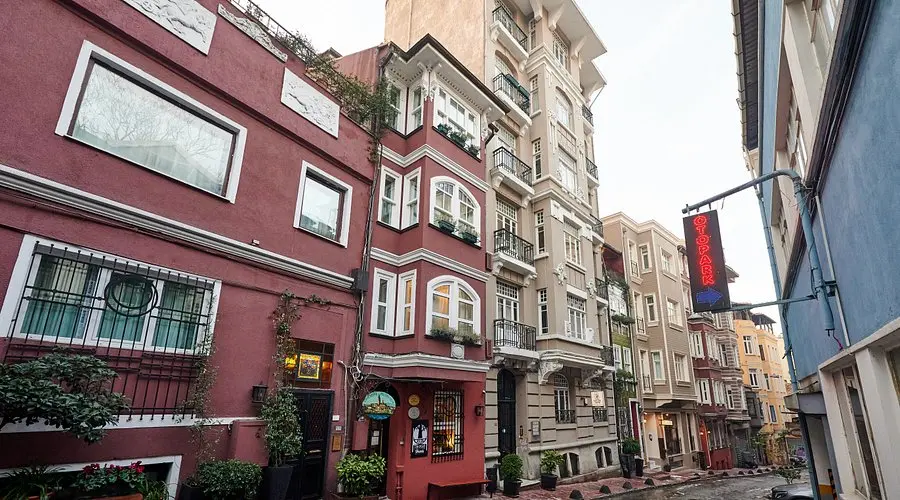
İstiklal itself is mainly a commercial axis: shops on the ground floors, offices, hotels and a small number of homes above. Residential demand is concentrated in the quieter side streets running off the avenue, towards Cihangir, Çukurcuma, TomTom and Asmalımescit.
In historic buildings on the avenue, value comes largely from ground-floor commercial use and the possibility of owning the whole building. The area lies within Beyoğlu's urban conservation zone; restoration and change of use require approval from the heritage conservation board.
For prices in the area see our Taksim and Pera area guides. Looking for residential or commercial property around İstiklal? Browse our portfolio or get in touch. Buying as a foreign national? See the title deed process for foreigners.