Walking TomTom
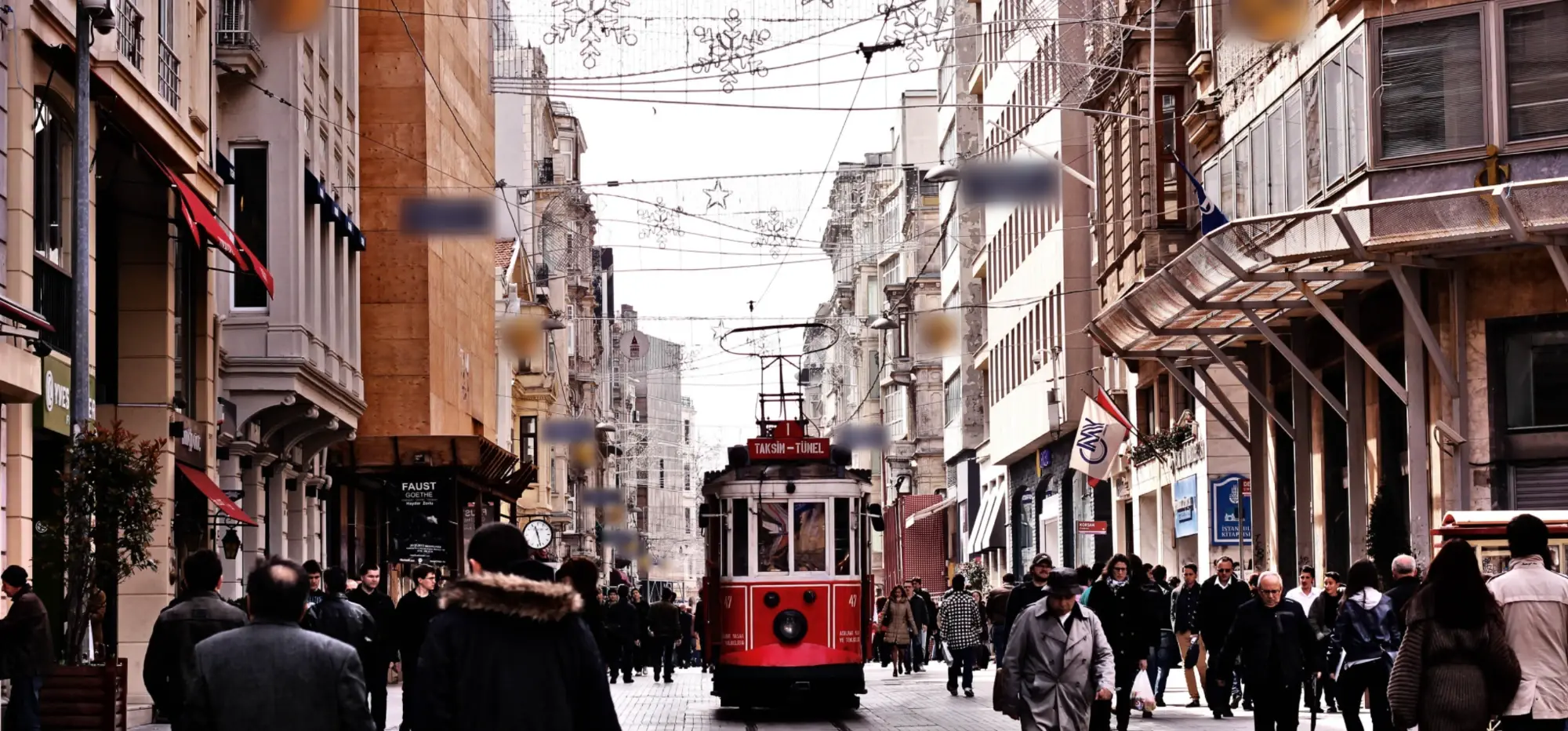
Below the crowds of İstiklal Avenue, on the slope that runs down towards Tophane, lies a small but dense neighbourhood: TomTom. Packed into a handful of streets are embassy palaces, Levantine apartment buildings, foreign schools and hidden gardens, making it one of the most layered corners of Beyoğlu.
The best way to understand TomTom is on foot. The nine stops below start on İstiklal, drop down the slope and climb back to the avenue. At a relaxed pace the whole walk takes an hour and a half to two hours. The slopes are steep, so wear comfortable shoes.
The route at a glance
- TomTom's side of İstiklal: Mısır Apartmanı and St. Anthony
- Meşher: from apartment block to art space
- Postacılar Street and the Dutch Chapel
- Tomtom Kaptan Street: schools and consulates
- The Palais de France
- Tomtom Kaptan Mosque
- The garden of the former French Orphanage
- Yeni Çarşı Street and Gülbaba
- Merkez Han: Koç's first building in Istanbul
A little context first
TomTom is one of Beyoğlu's official neighbourhoods. It takes its name from Tomtom Kaptan, who built a mosque here and about whom very little is known. As Pera grew in the 19th century, European embassy residences settled on this slope, followed by schools, churches and the apartment buildings of Levantine families. Most of the building stock you see today dates from the late 19th and early 20th centuries.
One edge of the neighbourhood touches İstiklal, the other Boğazkesen and Tophane. That is why TomTom feels glued to the city's busiest avenue and yet surprisingly quiet.
STOP 01TomTom's side of İstiklal
Start the walk on İstiklal Avenue, on the stretch near Galatasaray. Two buildings stand out here.
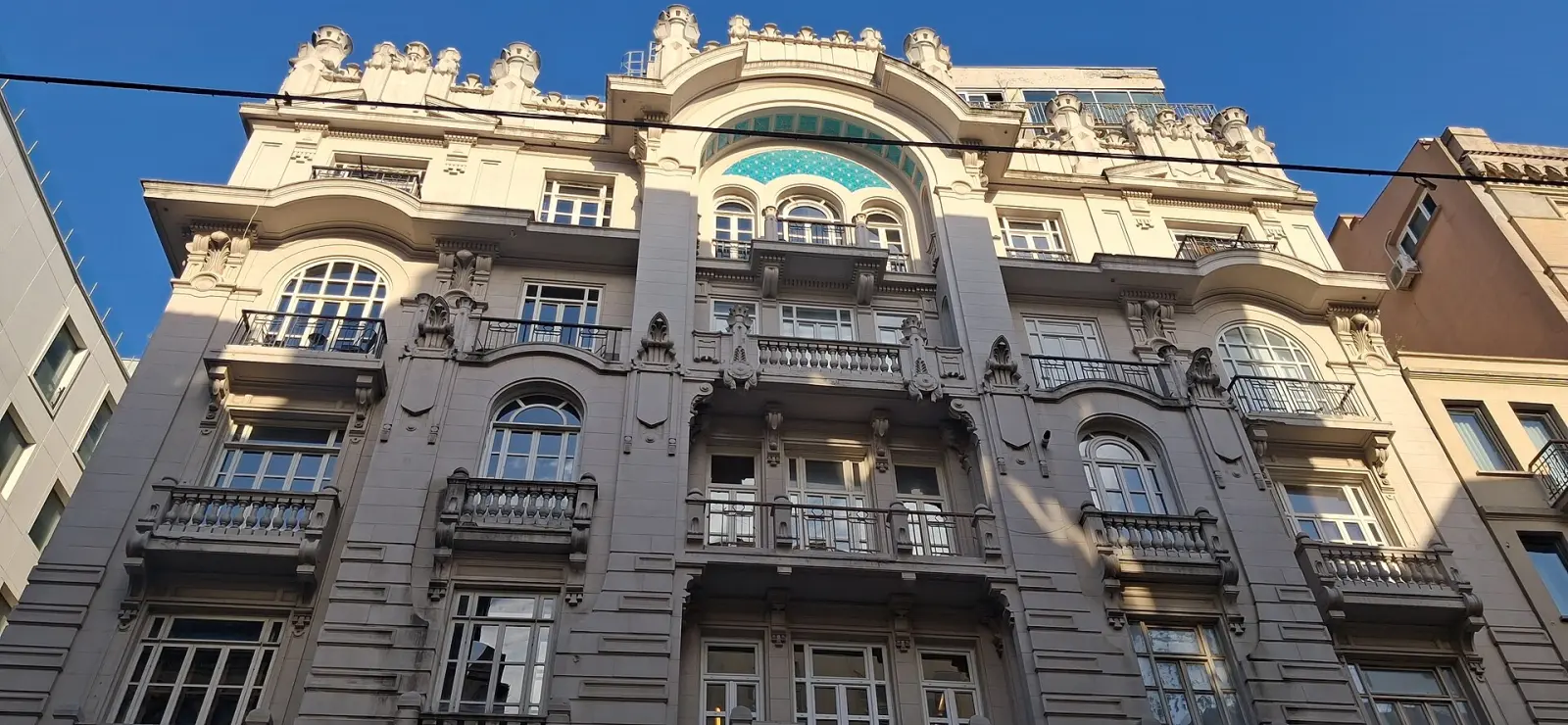
Mısır Apartmanı (the Egyptian Apartment Building) was built for Prince Abbas Halim Pasha of the Egyptian dynasty and completed around 1910. Its architect was Hovsep Aznavur. With its Art Nouveau lines, it is considered one of Istanbul's early reinforced-concrete buildings. Mehmet Akif Ersoy, the poet of the Turkish national anthem, was among those who lived here.
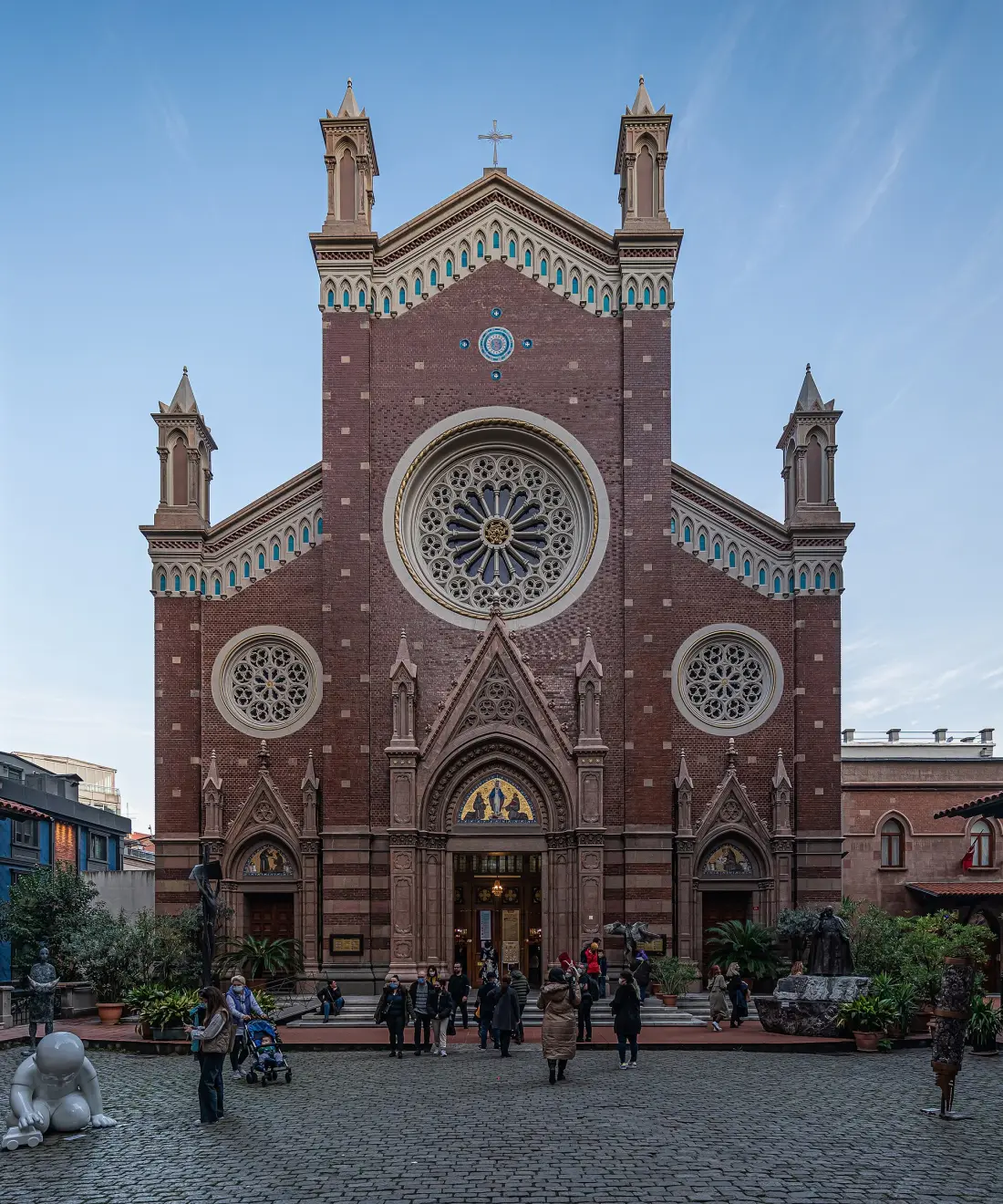
A few steps further rises the Church of St. Anthony of Padua (Sent Antuan), the largest Catholic church in Istanbul. The present neo-Gothic building was built between 1906 and 1912 to designs by Giulio Mongeri.
STOP 02Meşher
The Meşher building on İstiklal is today the exhibition space of the Vehbi Koç Foundation. The earliest known record of the building is the 1905 Goad insurance map, where it appears as the "Friedmann Apartment". Renamed Meymenet Han in the Republican era, it was restored between 2007 and 2009 and has hosted exhibitions as Meşher since 2019. The staircase and floor layout inside are as interesting as the shows.
From the back of Meşher, head down the slope towards Postacılar Street.
STOP 03Postacılar Street and the Dutch Chapel
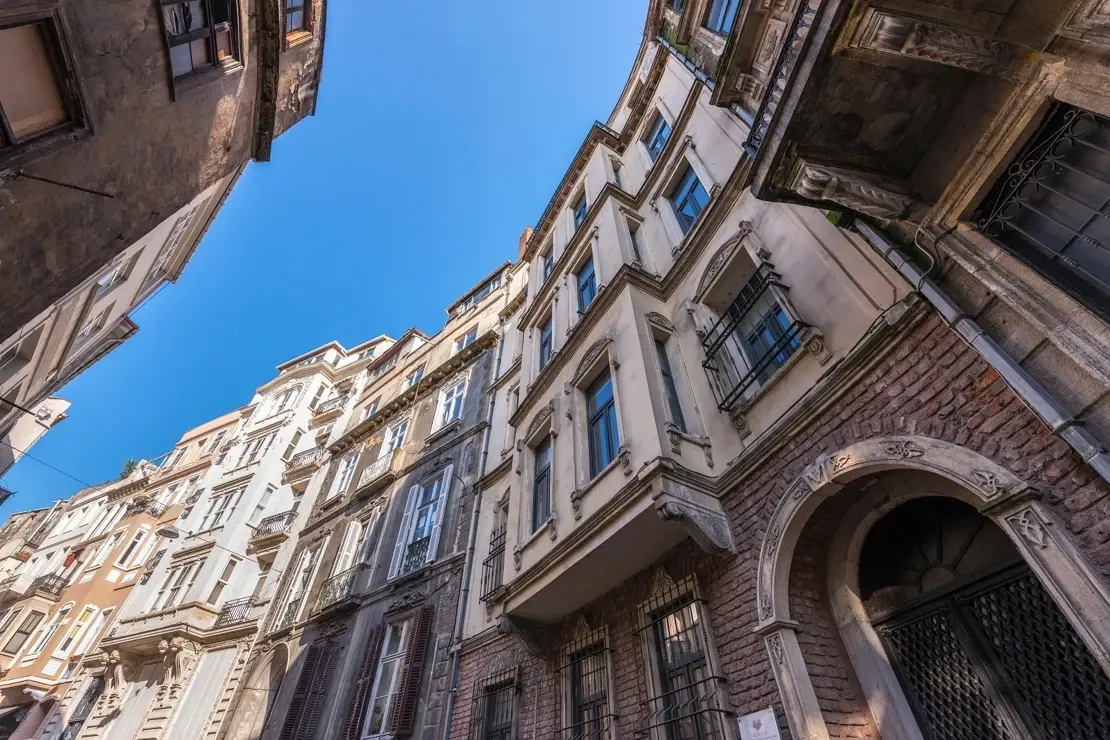
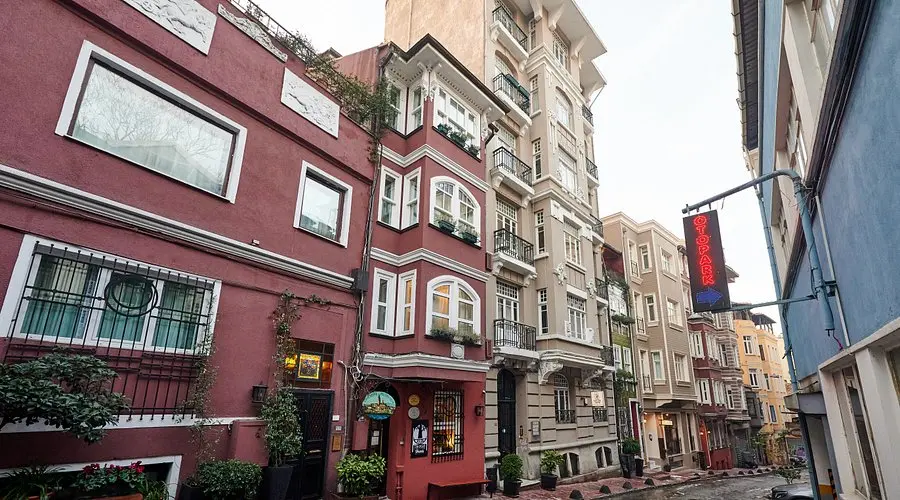
Postacılar Street is where the noise of İstiklal suddenly stops. Apartment buildings from the early 20th century line the street.
In the garden of the Consulate General of the Netherlands you will see a small stone building: the Dutch Chapel. It was built in 1711 as a stone storehouse to protect the embassy's documents and belongings from fire. After the fires that destroyed the wooden embassy building, it was converted entirely into a chapel. The congregation of the Union Church of Istanbul has held its Sunday services here since 1857.
STOP 04Tomtom Kaptan Street: schools and consulates
Steep Tomtom Kaptan Street, running down the slope, carries the neighbourhood's diplomatic and educational memory. The Italian High School and the Italian Consulate General are on this street.
The Beyoğlu campus of the Lycée Pierre Loti is here too. The historic building, listed in the heritage inventory as the "French Court", houses the primary and nursery sections of the school named after the French writer Pierre Loti, who loved Istanbul.
STOP 05The Palais de France
TomTom's most monumental building is the Palais de France. France's embassy in Istanbul stood on this land for centuries. The old building burned down completely in the Beyoğlu fire of 1831. Today's palace was built between 1839 and 1847 to designs by the architect Pierre-Léonard Laurécisque.
It is now the residence of the Consul General of France, with its main entrance on Nuru Ziya Street. The greenery behind the garden walls is a breathing space in its own right within the dense fabric of the neighbourhood.
STOP 06Tomtom Kaptan Mosque
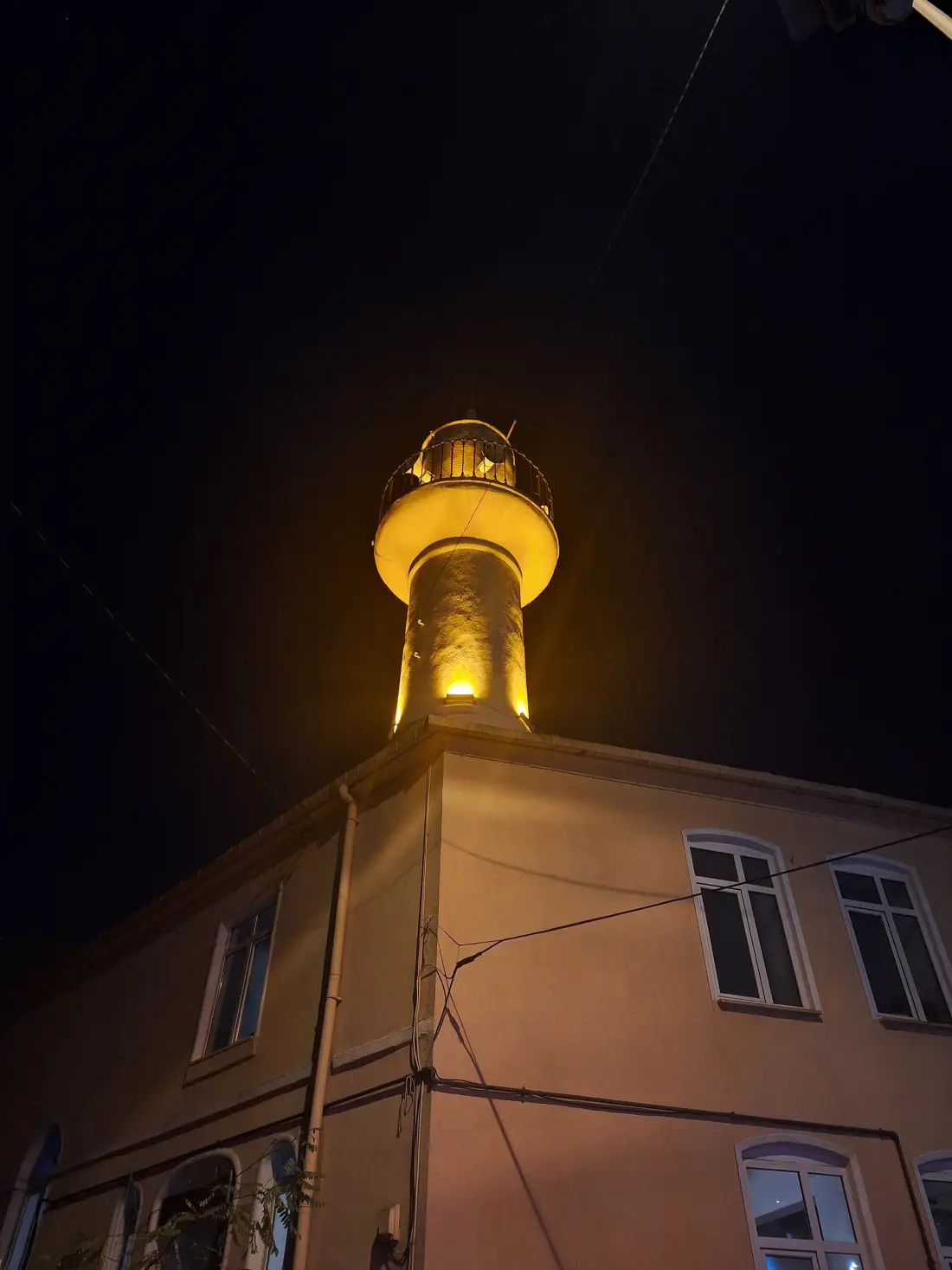
Tomtom Kaptan Mosque, which gave the neighbourhood its name, is a modest single-minaret building on the Boğazkesen side. Sources are unclear about who Tomtom Kaptan was and exactly when the mosque was built. Having survived fires and repairs, it is less a tourist sight than part of the neighbourhood's daily life.
STOP 07The garden of the former French Orphanage
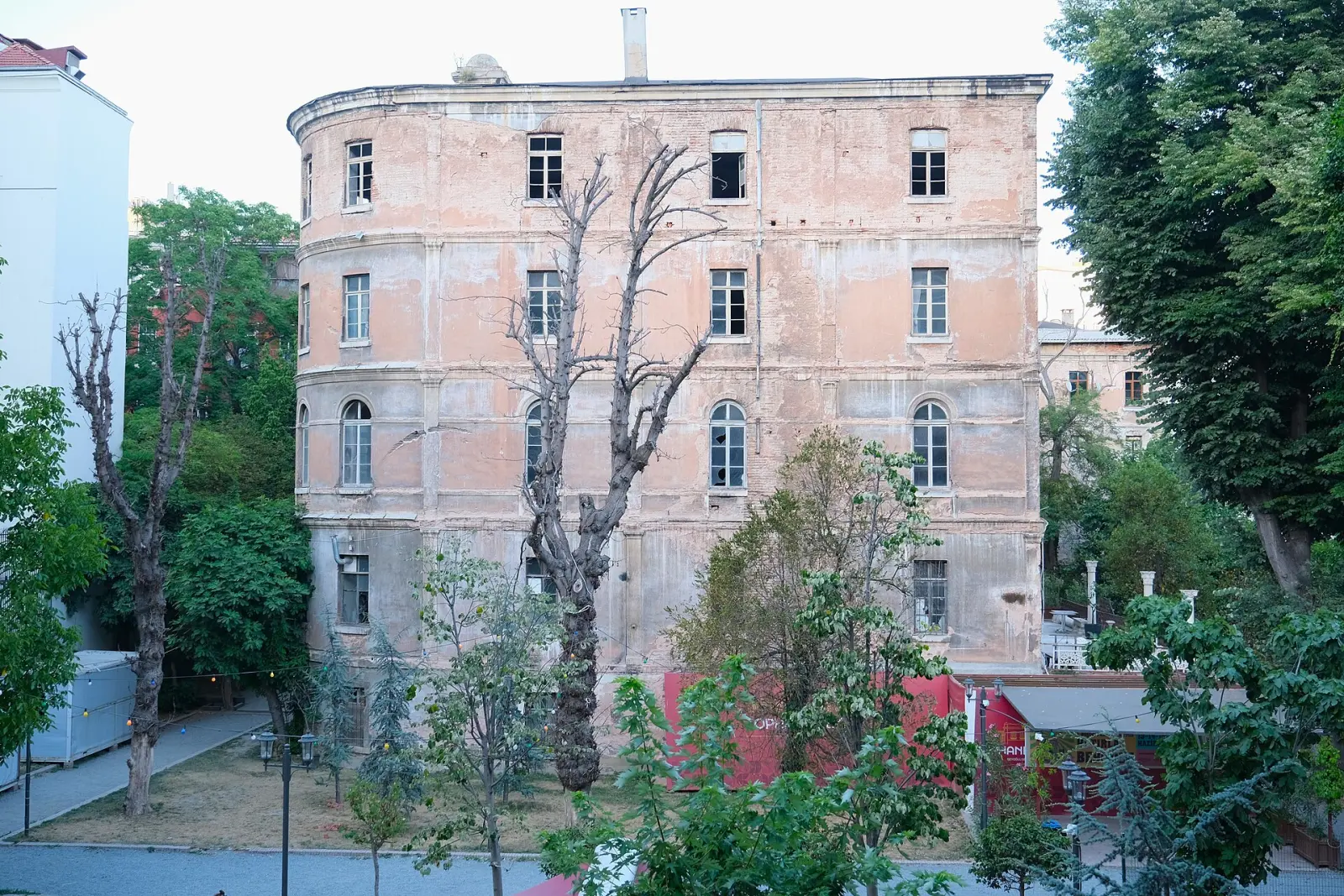
At the bottom of the slope, on the neighbourhood's Tophane edge, stands the former Saint Joseph French Orphanage. In 1869 Sultan Abdülaziz granted this land to French nuns on condition that it be used as an orphanage.
The orphanage's large garden is now run by Beyoğlu Municipality as a public space called "Tophane Mekân". It is a good place for a short break after the descent.
STOP 08Yeni Çarşı Street and Gülbaba
On the way back, follow Yeni Çarşı Street, which climbs up to İstiklal. With its antique dealers, second-hand booksellers and small galleries, it is the neighbourhood's liveliest axis.
Gülbaba Street, between Yeni Çarşı and Seferbostanı Street, takes its name from Gülbaba, whose tomb is here. According to legend, this dervish, who lived in the reign of Bayezid II, inspired the founding of the Galata Palace school, today's Galatasaray High School. Part of the story may be legend, but the tomb site is preserved as one of the oldest traces in the neighbourhood.
STOP 09Merkez Han
Climb back up to İstiklal and end the walk at Merkez Han, right next to St. Anthony's and a few steps from where you started. The building is thought to have been the mansion of the Armenian Catholic Düzoğlu family; records show it was confiscated in 1819 because it contained an unauthorised chapel.
Merkez Han was the first building Vehbi Koç bought in Istanbul, and Aygaz was founded here in 1961. The three-building complex was restored and since 2005 has housed Koç University's Research Center for Anatolian Civilizations (ANAMED).
Most consulate and school buildings can only be seen from outside; follow security staff's instructions when taking photos. Check Meşher's and other exhibition spaces' opening days and hours before you go. The slopes are steep and the pavements narrow; weekday mornings are the most comfortable time.
Living and investing in TomTom
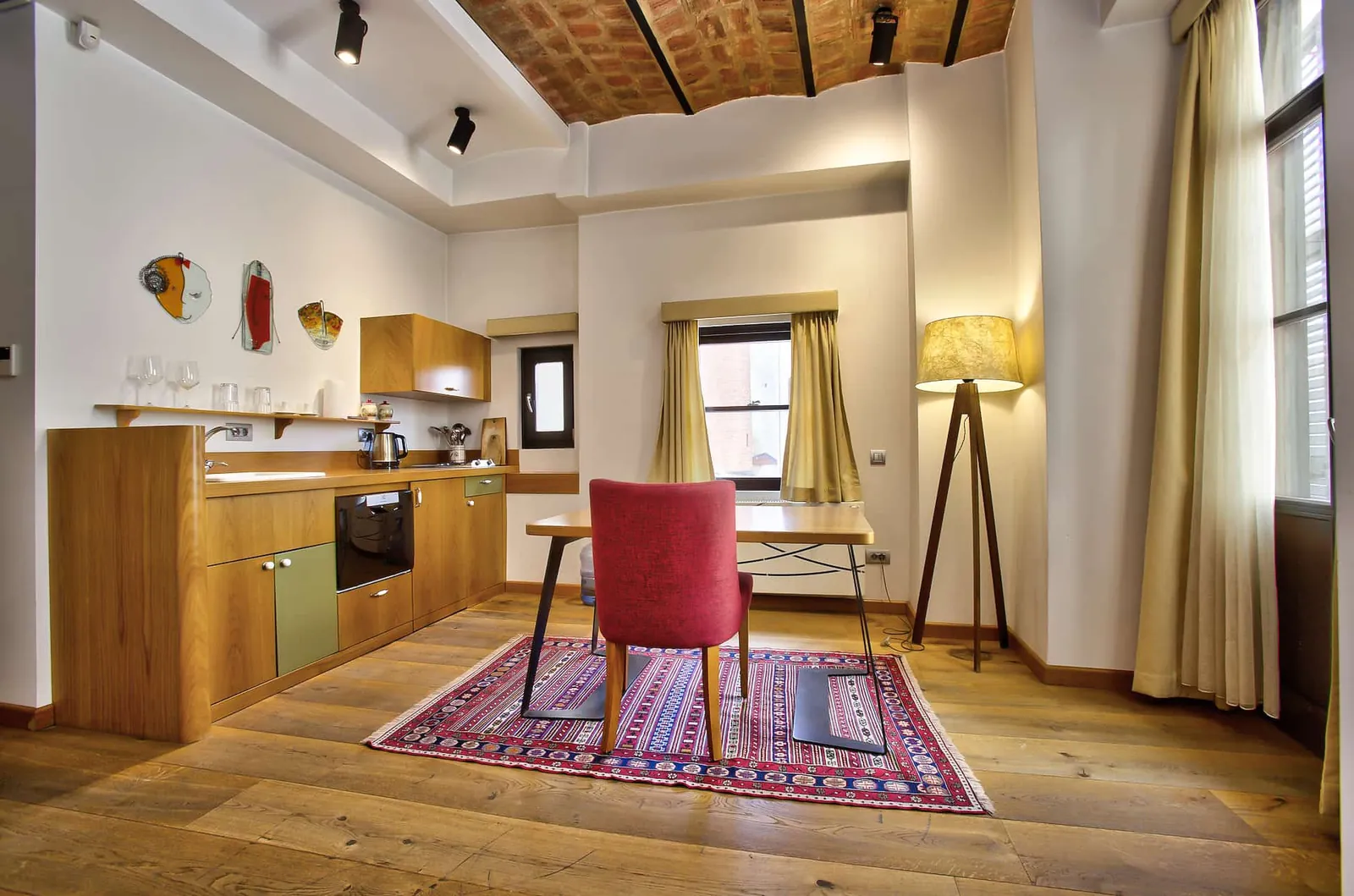
TomTom's property market is as distinctive as its streets. The building stock is mostly historic, load-bearing masonry Levantine apartment buildings. Because the area lies within Beyoğlu's urban conservation zone, façade and renovation works require approval from the heritage conservation board.
Housing supply in the neighbourhood is limited. Single-owner historic buildings lend themselves to uses such as boutique hotels. Turkey's Law No. 7464 has made short-term letting harder in multi-unit apartment buildings, which gives whole-building ownership an advantage. The consulates, schools and walking distance to İstiklal keep long-term rental demand strong.
For current prices per square metre, rent levels and a pre-purchase checklist, see our TomTom area guide; for how prices are formed in historic buildings, see our article on reading prices in historic masonry buildings. Looking to buy or rent in the neighbourhood? Browse our portfolio or get in touch; an advisor who knows every street will guide you.
Buying in Istanbul as a foreign national? Our guides on the title deed process for foreigners and citizenship by investment cover the essentials.