Walking Karaköy
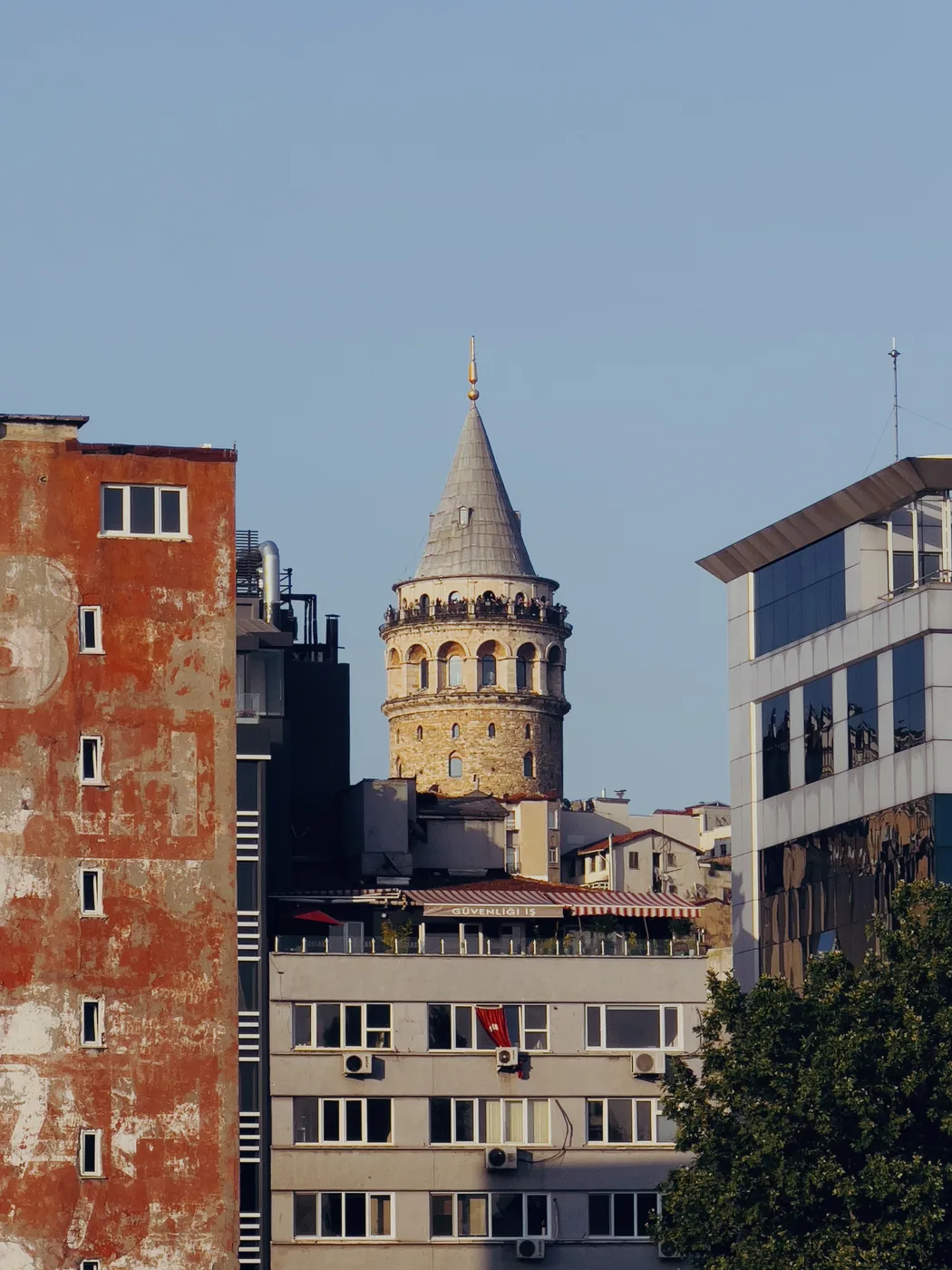
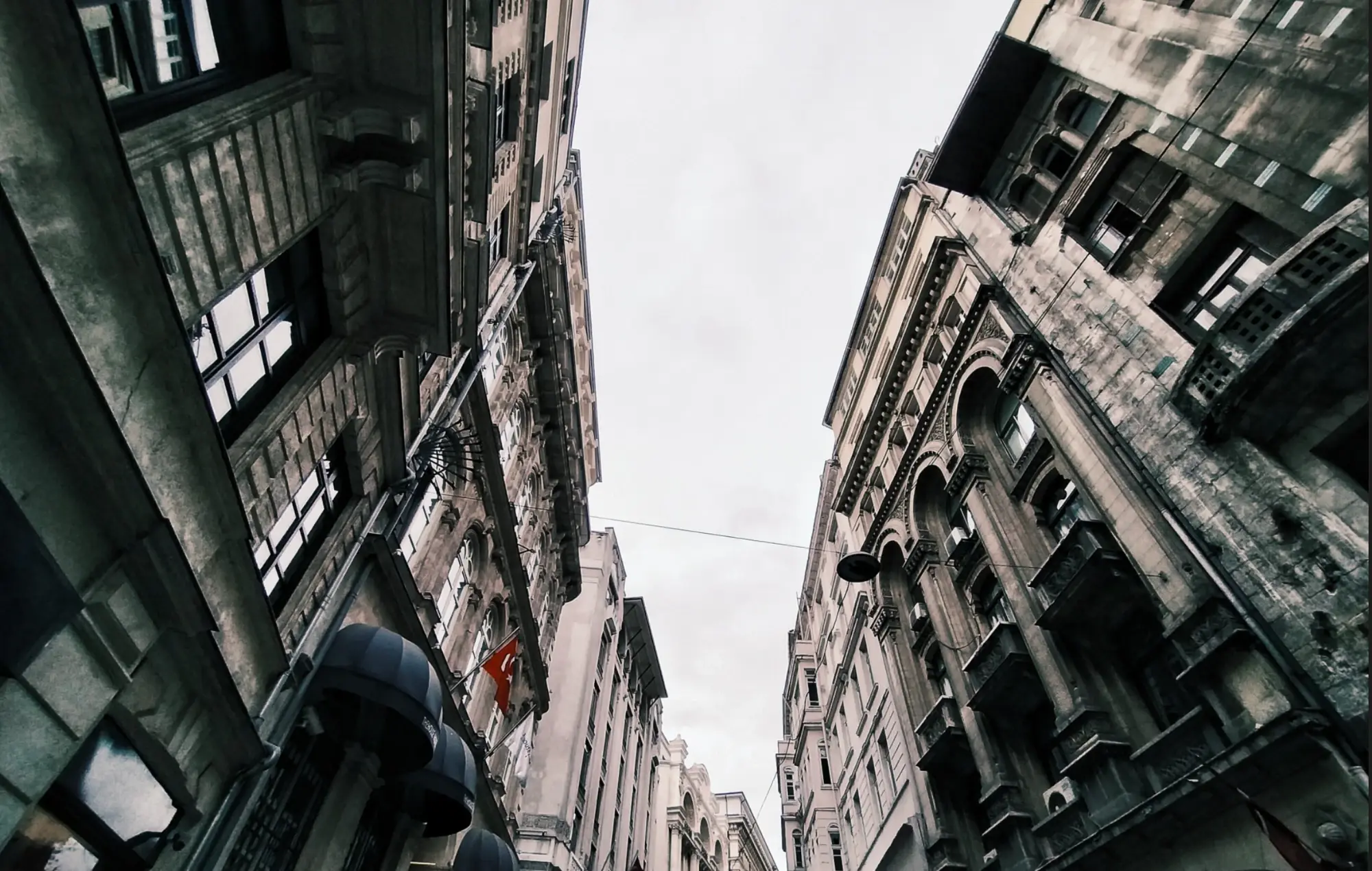
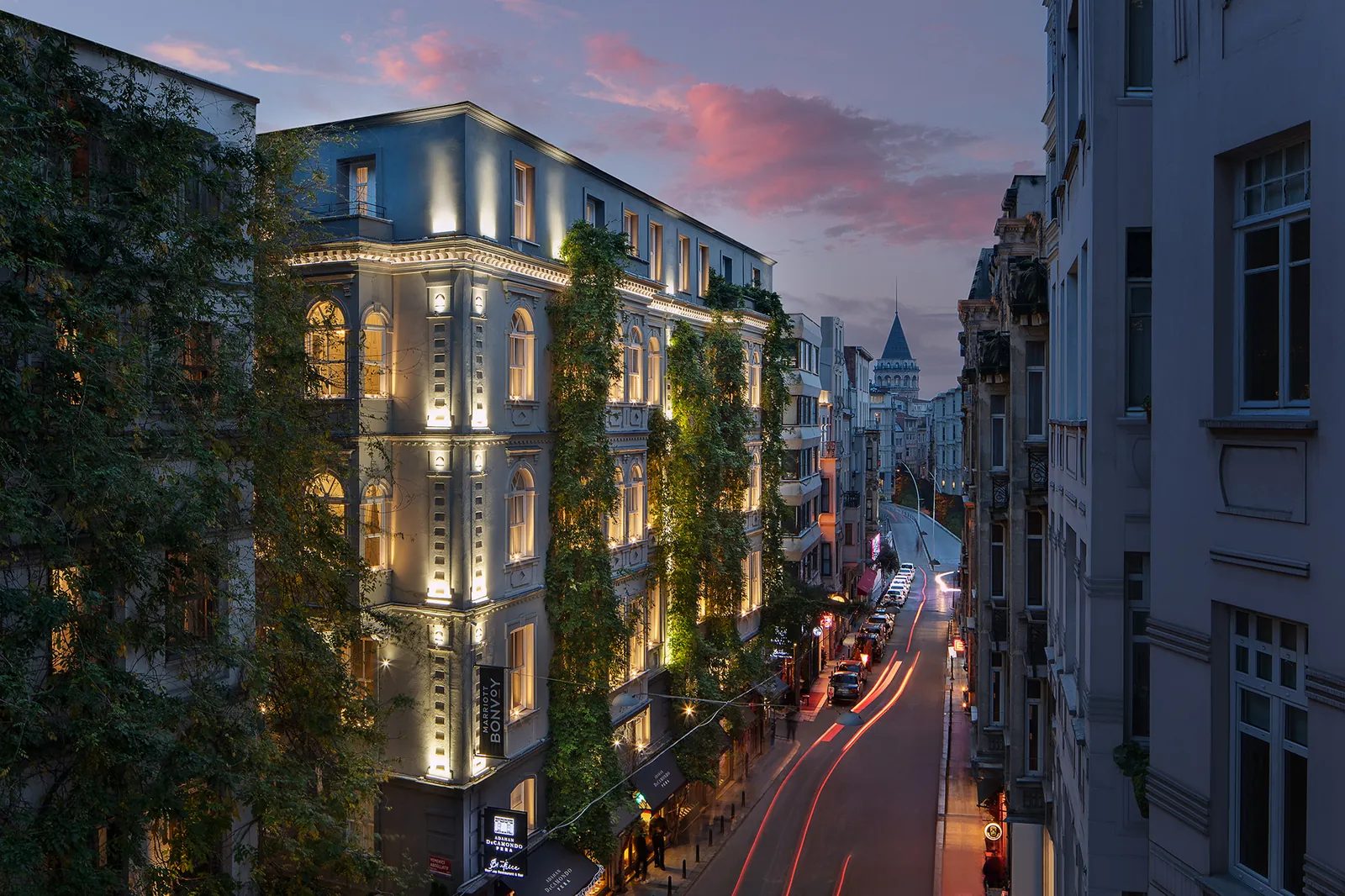
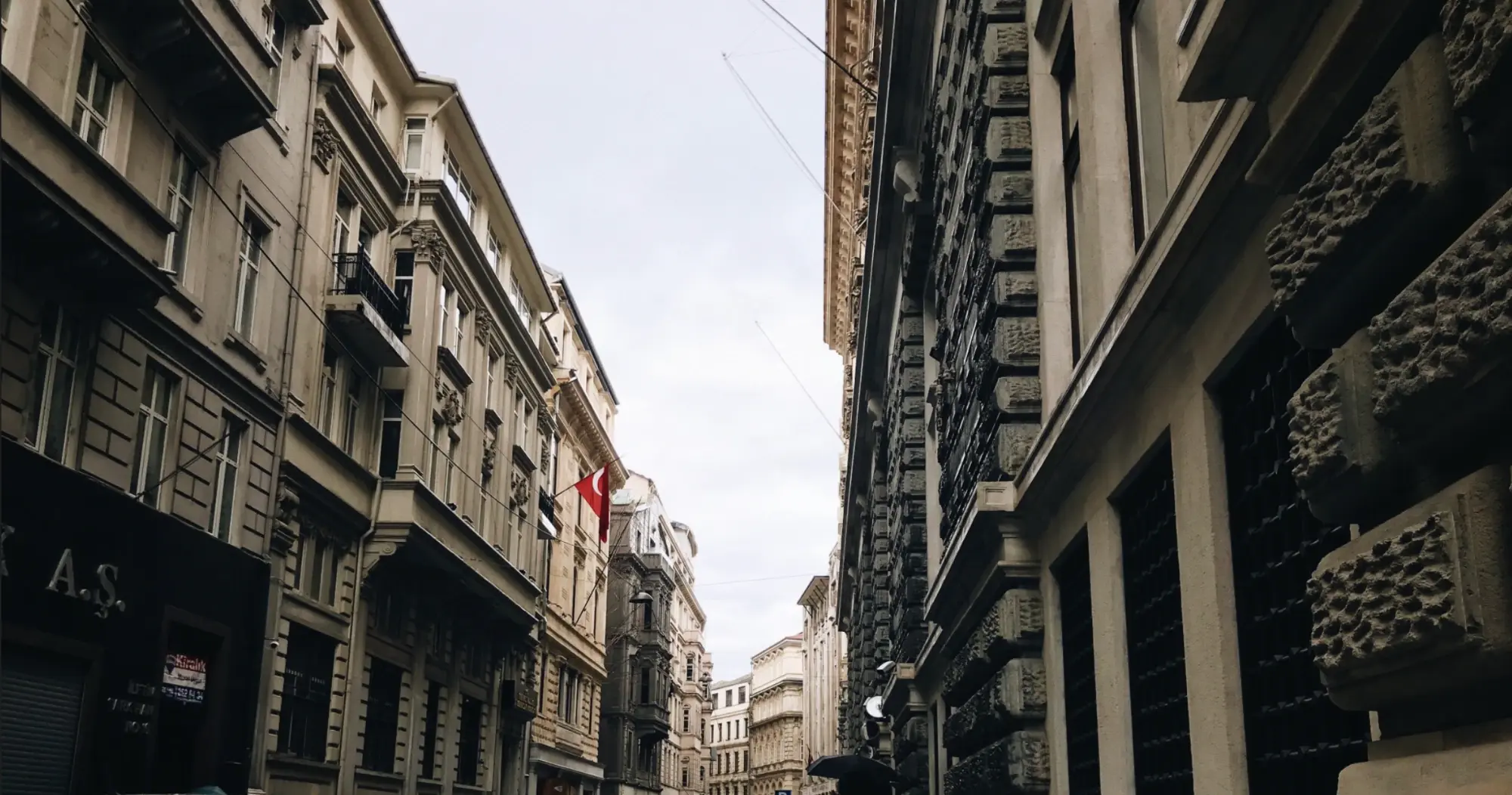
Stretching from the foot of the Galata Bridge to Tophane, Karaköy has been Istanbul's harbour gate for centuries. The hans of banks, insurers and shipping firms, churches on the roofs of buildings where Russian pilgrims stayed, and a mosque by Mimar Sinan all fit into a few streets. Over the past decade, with cafés, galleries and Galataport, the district has once again become one of the liveliest corners of the city.
This route starts on Karaköy Square, follows the pier and quayside, turns into the back streets with the pilgrim hostels, passes Galataport and ends at the Kılıç Ali Paşa Complex in Tophane. The way is almost entirely flat.
The route at a glance
- Karaköy Palas
- The former Vienna bank
- Bedri Rahmi's Tatlıcılar relief
- The pier and the quayside hans
- The Underground Mosque
- Russian pilgrim hostels and rooftop churches
- Galataport
- The Kılıç Ali Paşa Complex and the Tophane Fountain
A little context first
Karaköy was the walled harbour section of Genoese Galata. Under the Ottomans it remained the centre of customs, ferry piers and maritime trade. In the late 19th and early 20th centuries, with the construction of the quay and the growth of banking, the waterfront filled with large stone hans and bank buildings.
The district's name is said to come from the Karaite Jews who once lived here; there is no firm documentation, but it is the most common explanation.
STOP 01Karaköy Palas
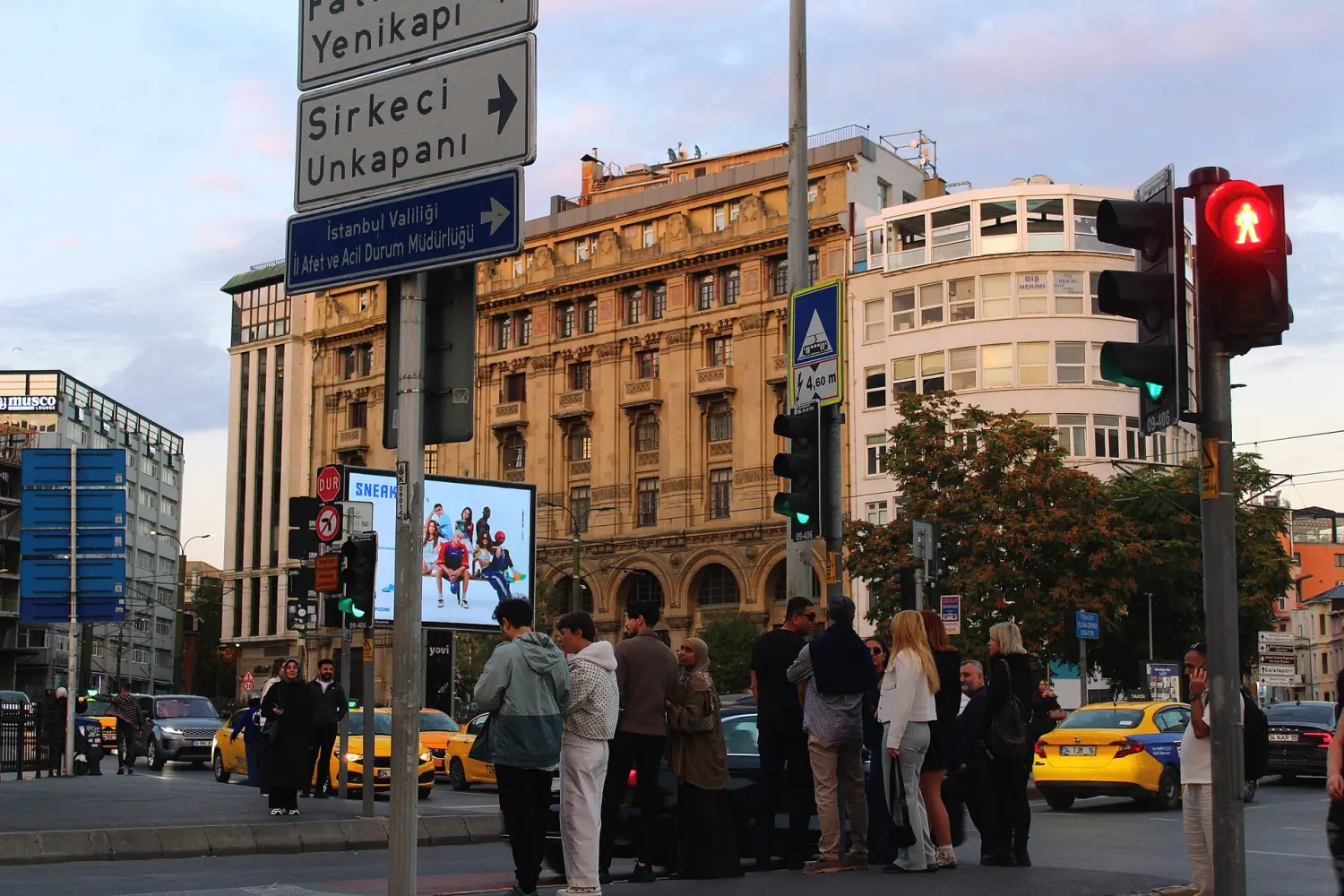
The most striking building on the square is Karaköy Palas, which turns the corner with a broad façade. Designed by Giulio Mongeri, it was completed in 1920. With its rich stonework and reliefs, it is one of the finest examples of the large office buildings that rose in Karaköy in the last years of the Ottoman Empire. For many years it housed bank branches; today it is also used for cultural and arts events.
STOP 02The former Vienna bank
Walking towards the bridge, you will see a monumental building with two statues on its balcony. It was built between 1910 and 1912 for the Wiener Bankverein, an Austrian bank, and passed to Ziraat Bank in 1944. It is considered one of the most important examples of Art Nouveau architecture in Karaköy.
The male figure on the balcony is said to represent industry and the female figure commerce. They are counted among the earliest figurative sculptures on a building façade in Istanbul.
STOP 03Bedri Rahmi's Tatlıcılar relief
Near the square, the Aksu Business Centre was commissioned in 1965 by the confectioner Salih Tatlıcı and carries two works by the painter Bedri Rahmi Eyüboğlu. The Tatlıcılar ("Confectioners") relief on the exterior weaves fish, nets and boats together with kilim motifs; the Kağnı ("Ox Cart") mosaic inside shows an ox cart crossing the Anatolian steppe.
The exterior relief has worn considerably over the years; still, it is worth pausing at an artwork that thousands of people walk past in Karaköy every day.
STOP 04The pier and the quayside hans
Past Karaköy Pier, where ferries leave for Kadıköy and Üsküdar, large stone buildings along the shore will catch your eye. The quay company reorganised this strip between 1910 and 1914: first Çinili Han in 1910–1911, then Merkez Rıhtım Han in 1912–1914. The Karaköy Passenger Hall between the two opened in 1940.
For many years these buildings housed the offices of shipping companies and state maritime institutions; today they have been restored as part of the Galataport project and opened to new uses.
STOP 05The Underground Mosque
Behind the quay, reached by steps leading below street level, is the Underground Mosque (Yeraltı Camii). Its dark interior, low-ceilinged and divided by columns, makes it one of Istanbul's most unusual mosques. The building is believed to be the lower floor of the fortress to which the Galata end of the Byzantine chain closing the Golden Horn was attached.
STOP 06Russian pilgrim hostels and rooftop churches
From Mumhane Street turn into Hoca Tahsin and Karatavuk streets. In the 19th century, Russian pilgrims on their way to Mount Athos and Jerusalem stayed in hans in Karaköy during their stop in Istanbul. Small churches were built on the top floors of these hans.
St. Panteleimon and St. Andrew are the best-known of these rooftop churches. Looking for a dome and a bell on top of what seems an ordinary office building from the street is one of Karaköy's most enjoyable discoveries. The churches can often only be visited during services or by ringing the door bell.
STOP 07Galataport
Back from the side streets to the shore, you come out onto the long quay of Galataport. Opened in 2021, the project placed the cruise passenger terminal underground, which opened about a kilometre of waterfront to the public. Museums, shops and restaurants fill the restored historic buildings.
The new building of Istanbul Modern and the old Tophane buildings are also along this stretch. For Galataport's effect on commercial property in Karaköy, see our separate article.
STOP 08The Kılıç Ali Paşa Complex and the Tophane Fountain
The route ends at the Kılıç Ali Paşa Complex in Tophane. Built by Mimar Sinan for Kılıç Ali Pasha, admiral of the Ottoman fleet, the complex was completed between 1578 and 1580; it comprises a mosque, madrasa, hamam and tomb. The mosque's plan recalls Hagia Sophia on a small scale.
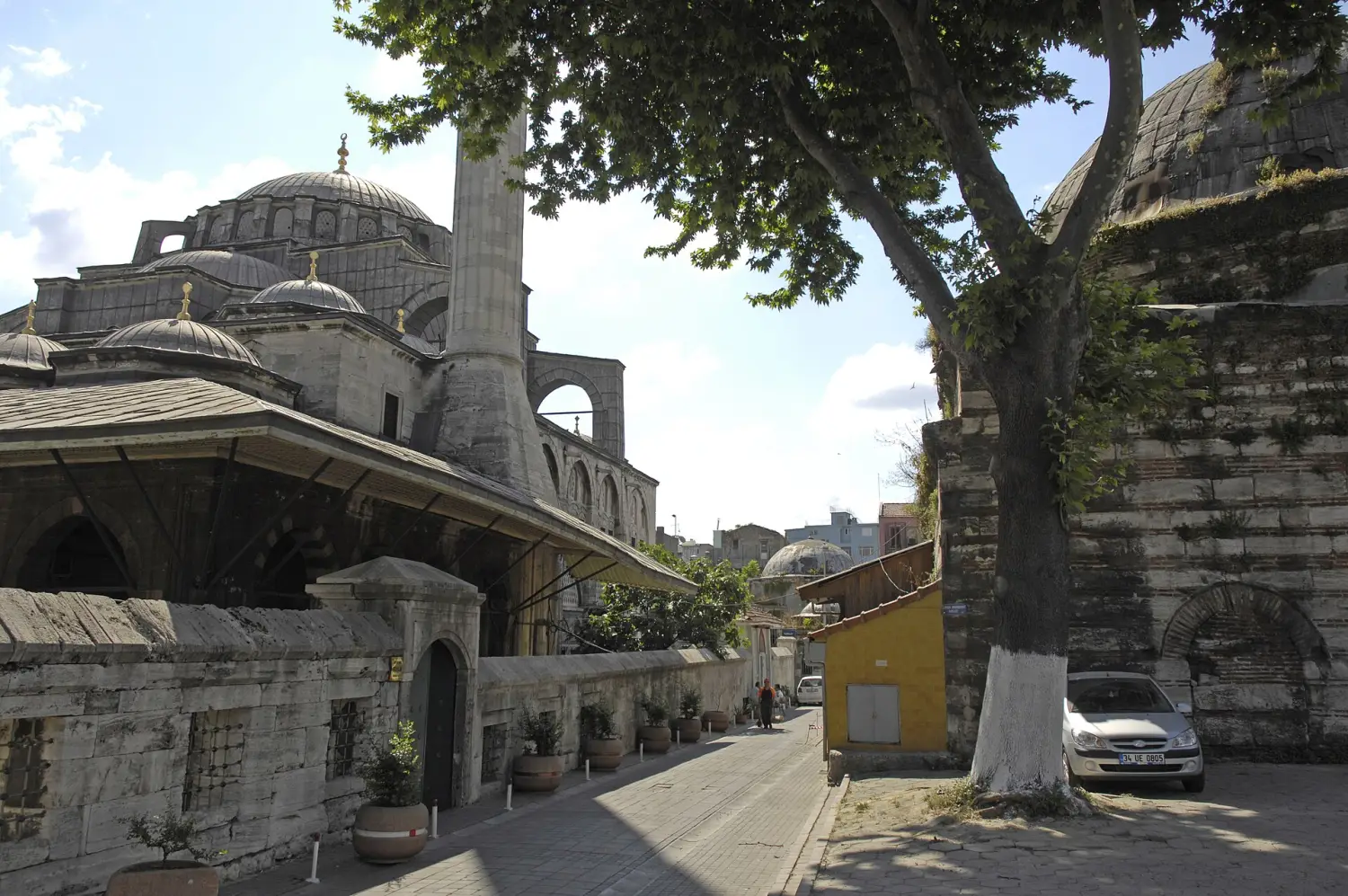
The complex's hamam reopened in 2012 after a seven-year restoration, which won a Europa Nostra award in 2017. It is often said that Cervantes, author of Don Quixote, worked on the construction of this mosque as a captive; however, Cervantes is known to have spent his captivity in Algiers, and there is no record that he ever came to Istanbul.
Opposite the mosque stands the Tophane Fountain, built by Mahmud I in 1732 and decorated with marble reliefs. From here you can take the tram to Kabataş or climb the slope up to TomTom.
Karaköy's back streets are very crowded on weekend afternoons; for the pilgrim hostels and churches, choose a weekday morning. Visit mosques outside prayer times and in appropriate dress. Because the route is flat and follows the tram line, you can leave it easily at any point.
Living and investing in Karaköy
Karaköy is mainly a commercial district: historic hans are used as offices, hotels and shops, and the housing stock is limited. The opening of Galataport has clearly increased pedestrian traffic and commercial rents along the waterfront.
For investors, the standout products are historic buildings with ground floors suited to commercial use and hans that could become boutique hotels. The district lies within Galata's urban and archaeological conservation zones; restoration and change of use require approval from the heritage conservation board.
For prices and rent levels in Karaköy see our Karaköy area guide. Looking for commercial or residential property? Browse our portfolio or get in touch.