Walking Cihangir
On the slope that falls from just below Taksim Square to the shores of the Bosphorus lies one of Istanbul's best-known neighbourhoods: Cihangir. For years the choice of writers, actors and foreigners settling in the city, it has a life of its own, shaped by steep streets, old apartment buildings and a sea that appears at every corner.
This route begins at the top of Sıraselviler Avenue, passes the streets where classic Yeşilçam films were shot and the busy square of Firuzağa, and ends at Cihangir Mosque at the bottom of the slope. The walk is almost entirely downhill; if you would rather not climb back, you can walk down to the Fındıklı tram stop.
The route at a glance
- The top of Sıraselviler: the Maksim building and Hagia Triada
- Along Sıraselviler Avenue
- Güneşli Street: a Yeşilçam film set
- Asri Turşucu and Neşeli Günler
- Firuzağa Mosque and square
- Orhan Kemal Museum
- Wooden houses and stepped streets
- Cihangir Mosque and the view
A little context first
The neighbourhood is named after Şehzade Cihangir, the son of Suleiman the Magnificent, who died young in 1553. In his memory, Suleiman commissioned Mimar Sinan to build a mosque at the end of the slope overlooking the Bosphorus; it was completed in 1559–1560 and the surrounding district came to be known by the same name.
Today "Cihangir" covers more than the official neighbourhood boundaries; the streets of Firuzağa and Kuloğlu are part of it in everyday speech. Apartment buildings from the late 19th and early 20th centuries sit side by side with the plainer buildings of the Republican period.
STOP 01The top of Sıraselviler: the Maksim building and Hagia Triada
As soon as you turn from Taksim Square into Sıraselviler Avenue, two buildings greet you. The building at the entrance to the avenue was built in 1914 to designs by Giulio Mongeri as the Majik Cinema. From 1921 it became, as the Maksim Gazinosu, one of the legendary venues of Istanbul nightlife. Today it is used as a hotel, but its façade has been preserved.
Right beside it rises Hagia Triada (Aya Triada), with its two bell towers and large dome. Built between 1876 and 1880, it is one of the largest Greek Orthodox churches in Istanbul. The Zappeion Greek High School next to its courtyard is still teaching.
STOP 02Along Sıraselviler Avenue
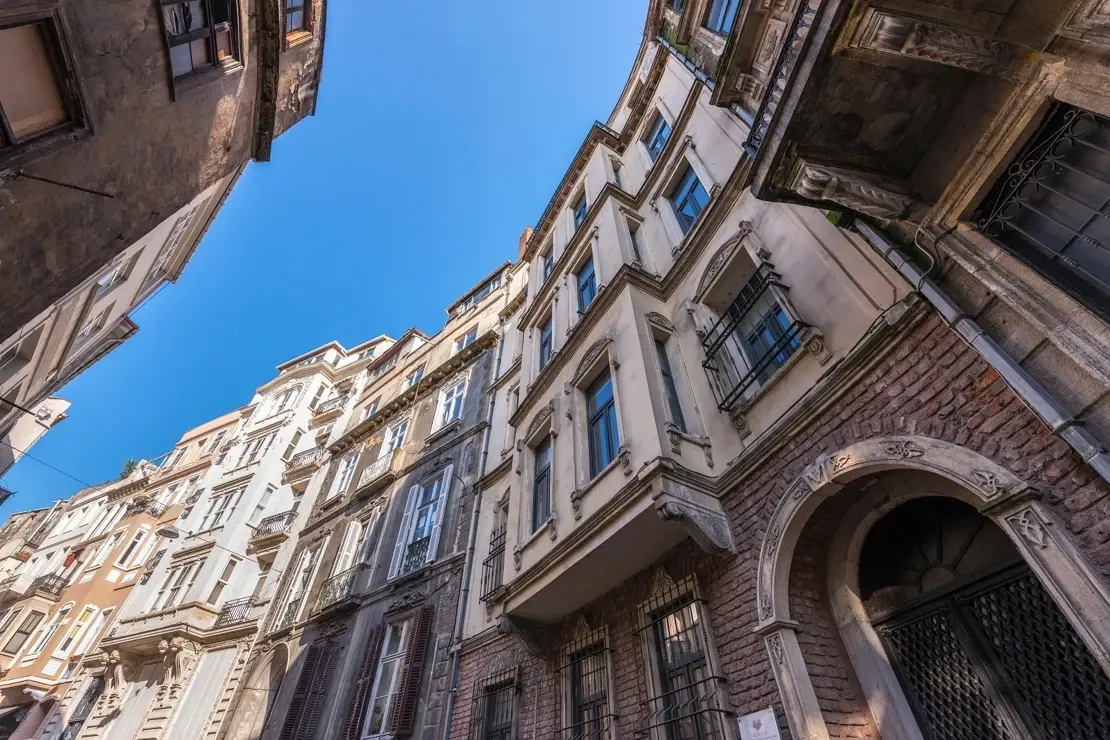
As you walk the narrow pavements of Sıraselviler, look up: the avenue is lined with late-19th-century masonry apartment buildings, consulates and some of Beyoğlu's old hospitals. The long-established German Hospital is also on this stretch.
Many of the apartment buildings on both sides carry the building's name or construction year above the entrance. It is a good introduction to Cihangir's housing stock: high ceilings, large windows, and mostly four- or five-storey load-bearing buildings.
STOP 03Güneşli Street: a Yeşilçam film set
Opposite Taksim Hospital, turn into Soğancı Street; between antique and design shops it leads to Güneşli Street. Cihangir was a favourite backdrop of 1970s Turkish cinema, known as Yeşilçam, and this street holds one of the best-known traces of that era.
In the 1976 comedy Kapıcılar Kralı (King of the Doormen), starring Kemal Sunal, the apartment building where the story unfolds is the Selahattin Zeren Apartment on Güneşli Street. The film's memorable chase scenes were shot on nearby Bakraç and Oba streets.
STOP 04Asri Turşucu and Neşeli Günler
Return to Sıraselviler and walk downhill. With jars filling its small window, Asri Turşucu is one of Cihangir's oldest shops. The pickle business was founded in 1913 in Edirnekapı and moved to its current location in 1938.
The shop became famous through the pickle-shop scenes of the 1978 film Neşeli Günler (Happy Days). The story is also said to have been inspired by a pickle shop in İzmir, but this is the counter where the scenes were shot.
STOP 05Firuzağa Mosque and square
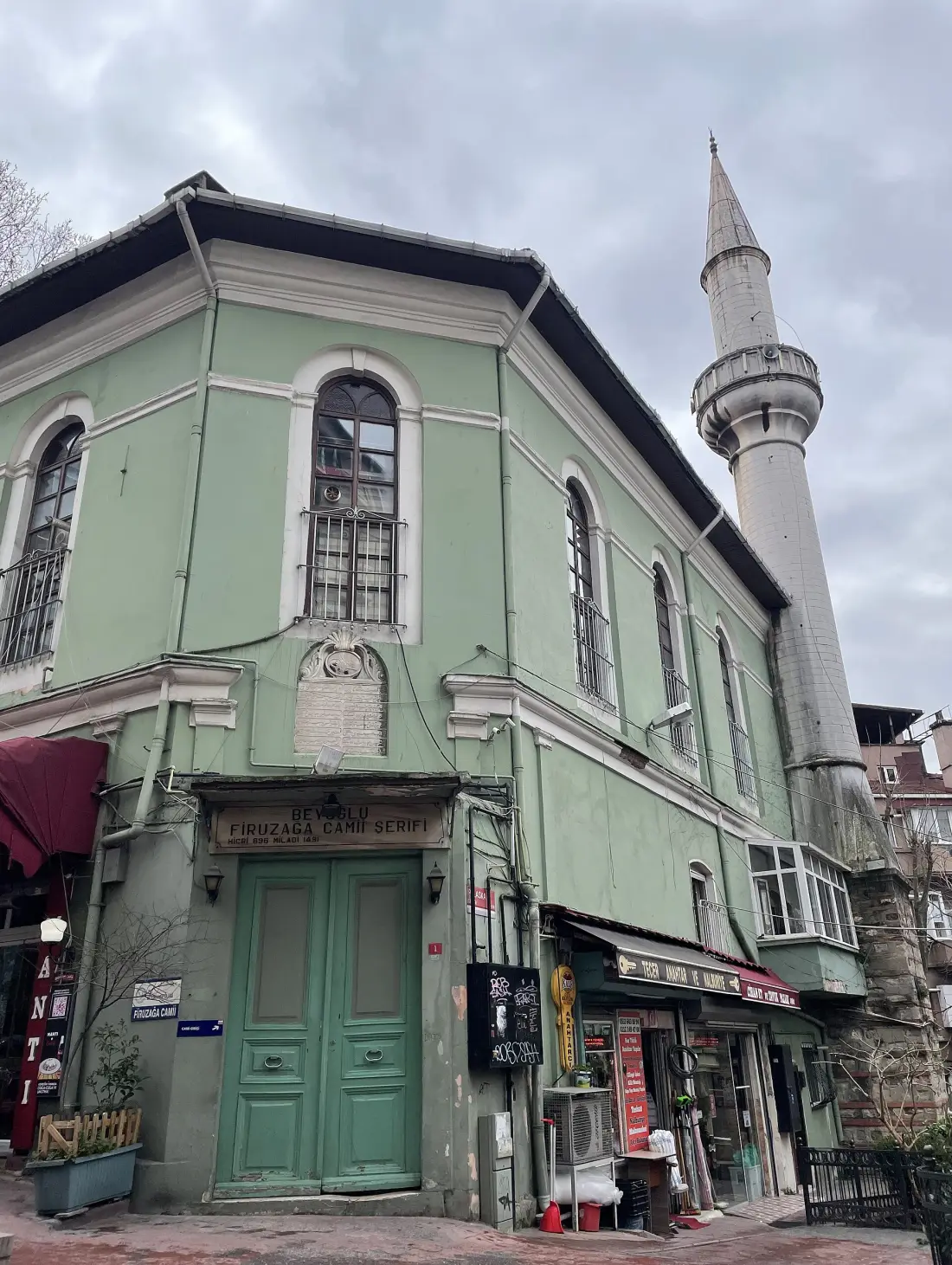
A few steps past Asri Turşucu, turn right into Firuzağa. The mosque that gives the square its name was built in 1491, in the reign of Bayezid II, by Firuz Ağa; the date is written on the sign above its door. It is among the oldest known buildings in Cihangir.
With tables set out under the trees and its breakfast cafés, the area around the mosque is the neighbourhood's meeting point. On weekend mornings you may need to arrive early to find a seat.
STOP 06Orhan Kemal Museum
On the streets descending from Firuzağa there is a small museum dedicated to Orhan Kemal, one of the great names of 20th-century Turkish literature and author of Bereketli Topraklar Üzerinde and Murtaza. It displays the writer's photographs, first editions of his books, letters and personal belongings.
The museum is small; we recommend checking its opening days and hours before visiting.
STOP 07Wooden houses and stepped streets
As you descend into Cihangir's lower streets, the traffic fades and the steps begin. This part still has surviving wooden houses, small gardens and street cats asleep on every corner. The area around İlyas Çelebi Mosque, with street views opening towards the Bosphorus, is one of the most photogenic corners of the neighbourhood.
These streets are narrow and many are dead ends; don't worry about getting lost, as long as you keep heading downhill you will reach Cihangir Mosque.
STOP 08Cihangir Mosque and the view
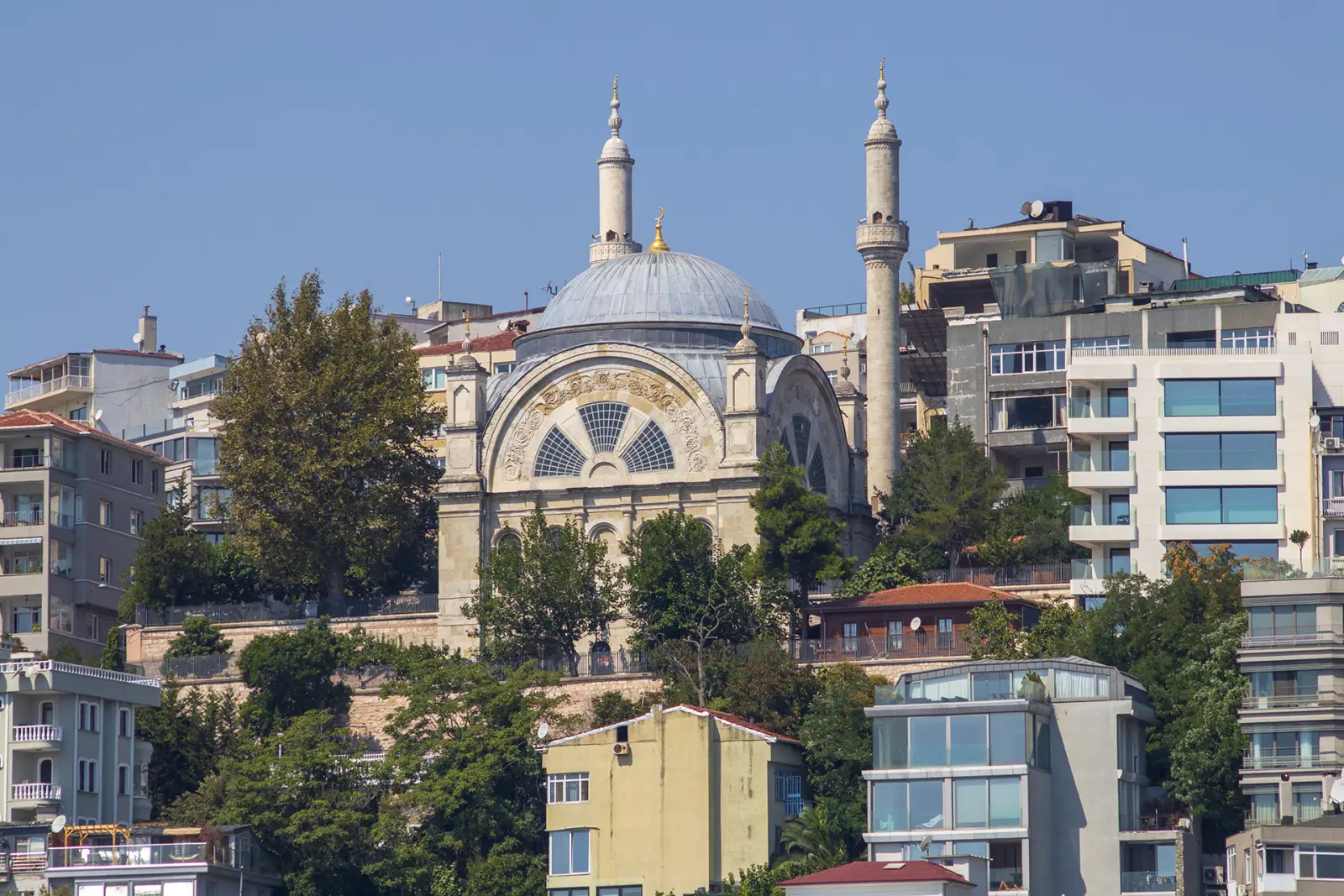
The route ends at Cihangir Mosque, which gave the neighbourhood its name. The first building, completed by Mimar Sinan in 1559–1560, burned five times over the following centuries and was rebuilt each time. The single-domed, twin-minaret mosque you see today was rebuilt in 1889–1890 under Abdülhamid II; its most recent restoration was completed in 2018.
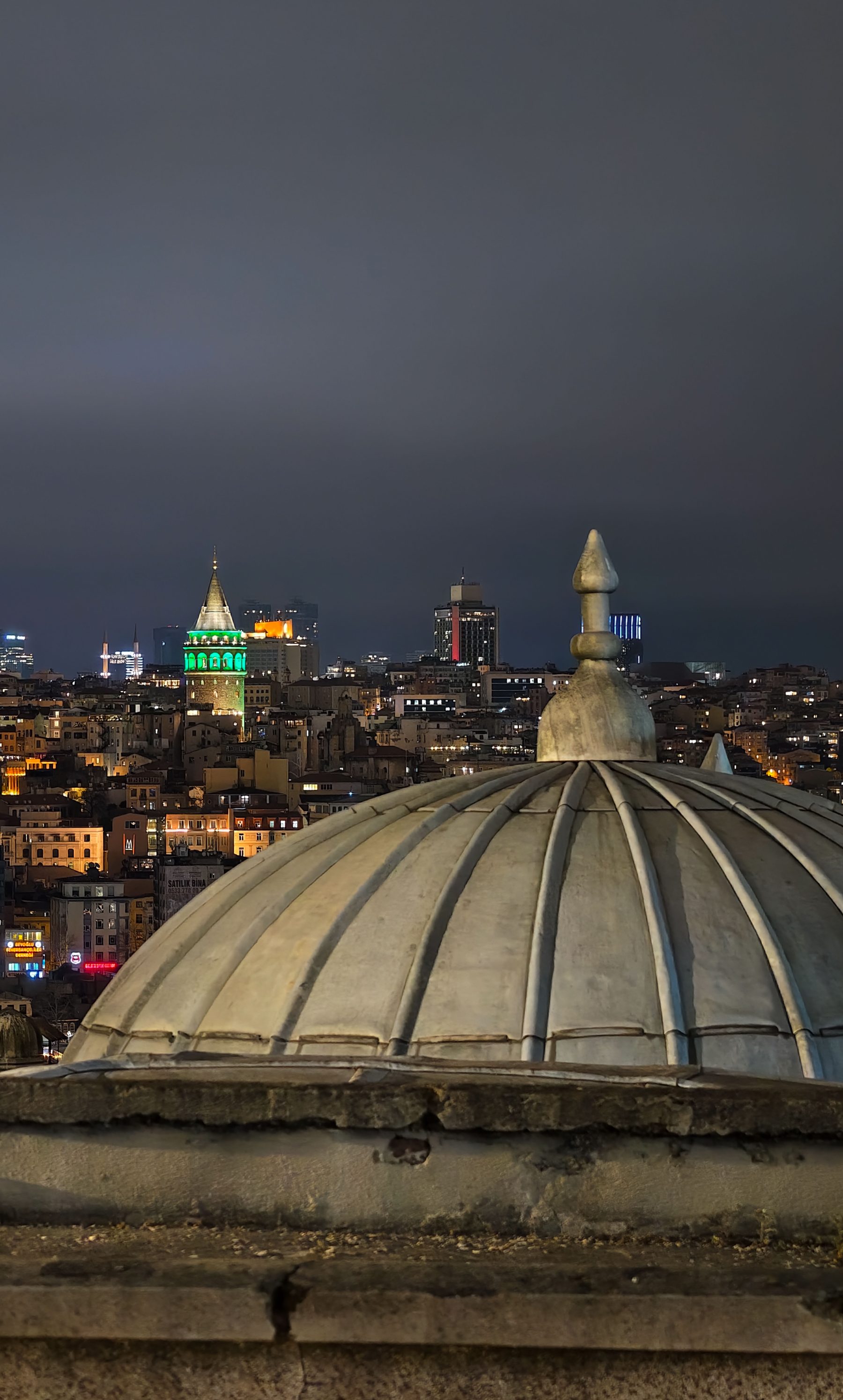
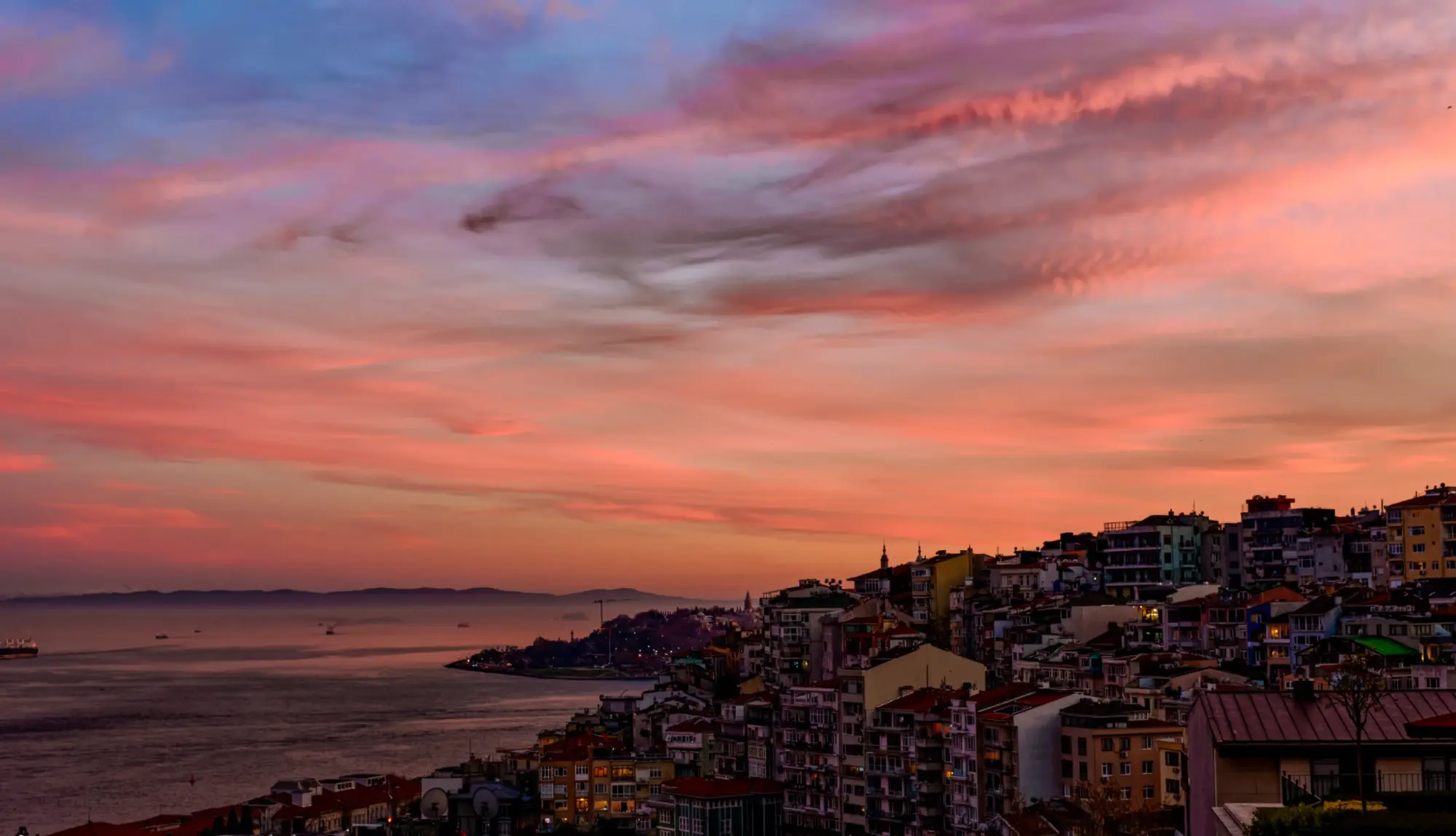
The mosque's courtyard is one of the widest viewpoints in Istanbul. Straight ahead is the skyline of the Historic Peninsula, below is Galataport, across the water are Üsküdar and the Maiden's Tower, and on clear days you can see the Princes' Islands as well.
To reach the shore, take the long stepped streets that begin beside the mosque. One of them is called Merkep Bağırtan, roughly "where donkeys bray"; the name is said to come from pack donkeys struggling on its steep steps.
The route is mostly downhill; doing it in reverse is much more tiring. Visit Cihangir Mosque outside prayer times and in appropriate dress. Firuzağa is very crowded until midday at weekends; for a quiet walk, choose a weekday morning. On the way back, the Fındıklı tram stop and Kabataş are close by.
Living and investing in Cihangir
Cihangir is one of Beyoğlu's most stable housing markets. Most buyers want to live here, which shields prices from short-term swings. Bosphorus-facing façades, garden floors and buildings with lifts are the most sought-after features.
A large part of the building stock consists of historic load-bearing buildings, and the neighbourhood lies within Beyoğlu's urban conservation zone, so renovation and façade work require approval from the heritage conservation board. On the rental side, demand from foreign professionals and the arts community is constant. Turkey's Law No. 7464 has made short-term letting harder in apartment buildings, so investment calculations are more reliable when based on long-term rent.
For current prices and rent levels see our Cihangir area guide, and to compare the two neighbourhoods read Cihangir or Galata?. Looking for a property in Cihangir? Browse our portfolio or get in touch. Buying as a foreign national? Read our guide to the title deed process for foreigners.